
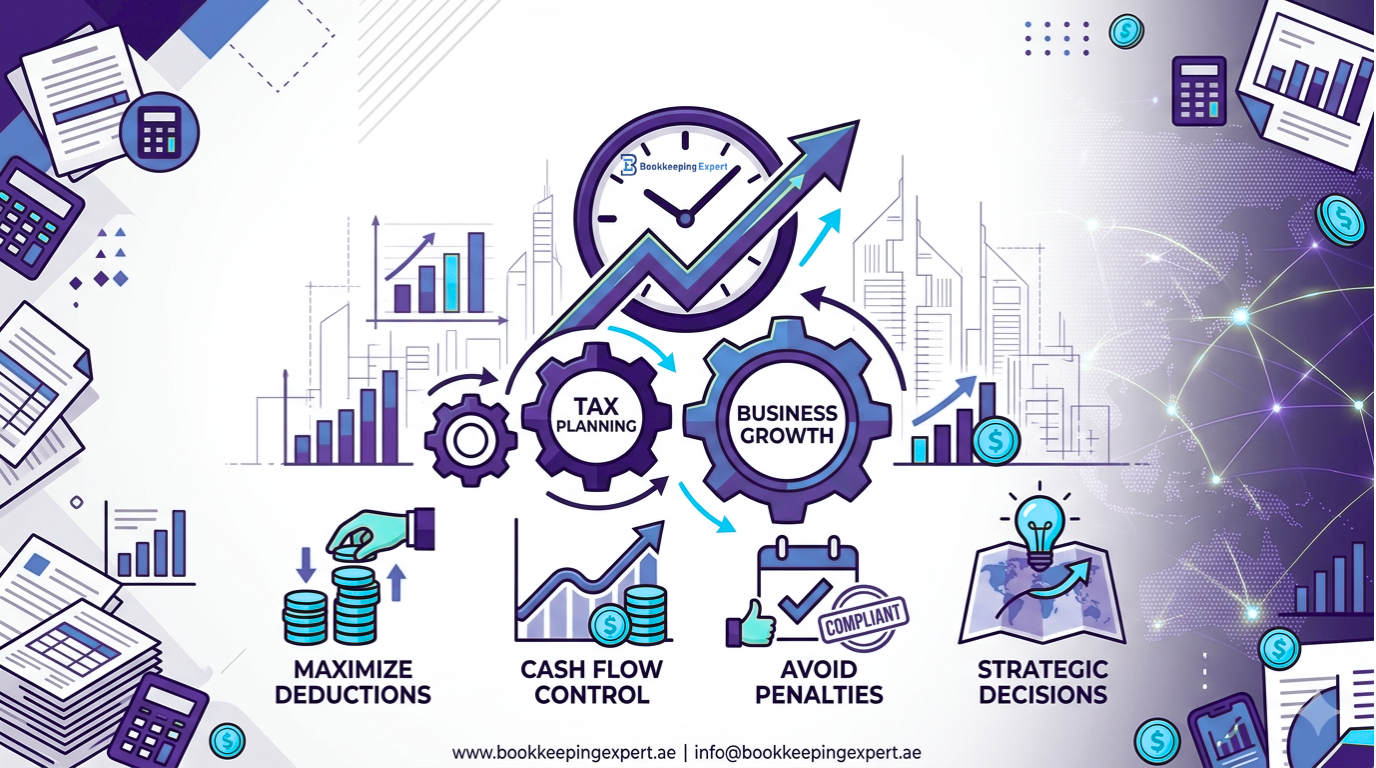
In business, timing is everything—and taxes are no exception. While many companies treat taxes as a last-minute obligation, forward-thinking businesses recognize tax planning as a year-round strategy. Done right and done early, it doesn’t just ensure compliance—it actively drives profitability, stability, and growth.
Tax Planning: More Than Just Filing Returns
Tax planning isn’t about reacting to deadlines; it’s about anticipating them. It involves analyzing your financial position throughout the year to legally minimize tax liabilities while staying fully compliant with regulations.
Businesses that delay tax planning often find themselves making rushed decisions, missing deductions, or paying more than necessary.
1. Better Cash Flow Management
One of the most immediate benefits of timely tax planning is improved cash flow control. When you understand your tax obligations in advance, you can:
-
Set aside funds systematically
-
Avoid sudden financial strain
-
Allocate capital more efficiently
Instead of scrambling for payments at the last minute, your business operates with financial clarity and confidence.
2. Maximizing Deductions and Credits
Missed deductions are one of the most common—and costly—mistakes businesses make. Early tax planning helps identify:
-
Eligible business expenses
-
Depreciation opportunities
-
Tax credits and incentives
By planning ahead, you ensure nothing is overlooked and every allowable benefit is utilized.
3. Avoiding Penalties and Compliance Risks
Late filings, incorrect calculations, or non-compliance can result in penalties that directly impact your bottom line. Timely tax planning ensures:
-
Accurate documentation
-
On-time filings
-
Proper tax calculations
This reduces the risk of audits and keeps your business in good standing with regulatory authorities.
4. Smarter Business Decisions
Tax planning plays a critical role in strategic decision-making. Whether you’re hiring, investing, expanding, or purchasing assets, understanding the tax implications beforehand helps you make informed choices.
For example:
-
When is the best time to invest in new equipment?
-
Should you defer income or accelerate expenses?
-
How will expansion impact your tax liability?
These decisions are far more effective when guided by proactive tax planning.
5. Supporting Business Growth
As your business grows, so do your tax responsibilities. Without proper planning, increased revenue can lead to unexpected tax burdens. Timely tax planning ensures your growth is sustainable by aligning your tax strategy with your expansion goals.
6. Staying Ahead of Changing Regulations
Tax laws and compliance requirements evolve frequently, especially in dynamic business environments like the UAE. Staying updated is critical, but doing so at the last minute can lead to errors.
Proactive planning allows businesses to:
-
Adapt quickly to regulatory changes
-
Implement necessary adjustments
-
Maintain compliance without disruption
7. Reducing Year-End Stress
Last-minute tax preparation often leads to rushed decisions, overlooked details, and unnecessary stress. Timely tax planning spreads the workload throughout the year, making the process smoother and more manageable.
8. Building Financial Discipline
Consistent tax planning encourages better financial habits. Businesses become more organized, maintain accurate records, and develop a deeper understanding of their financial health.
This discipline translates into stronger overall management and long-term success.
Final Thoughts
Timely tax planning isn’t just about saving money—it’s about gaining control. It transforms taxes from a reactive burden into a proactive tool for growth and efficiency.
Businesses that plan early don’t just survive compliance—they leverage it. And in today’s competitive environment, that edge can make all the difference.
If your tax strategy only begins at year-end, it may be time to rethink your approach and move towards a more proactive, strategic model.
