
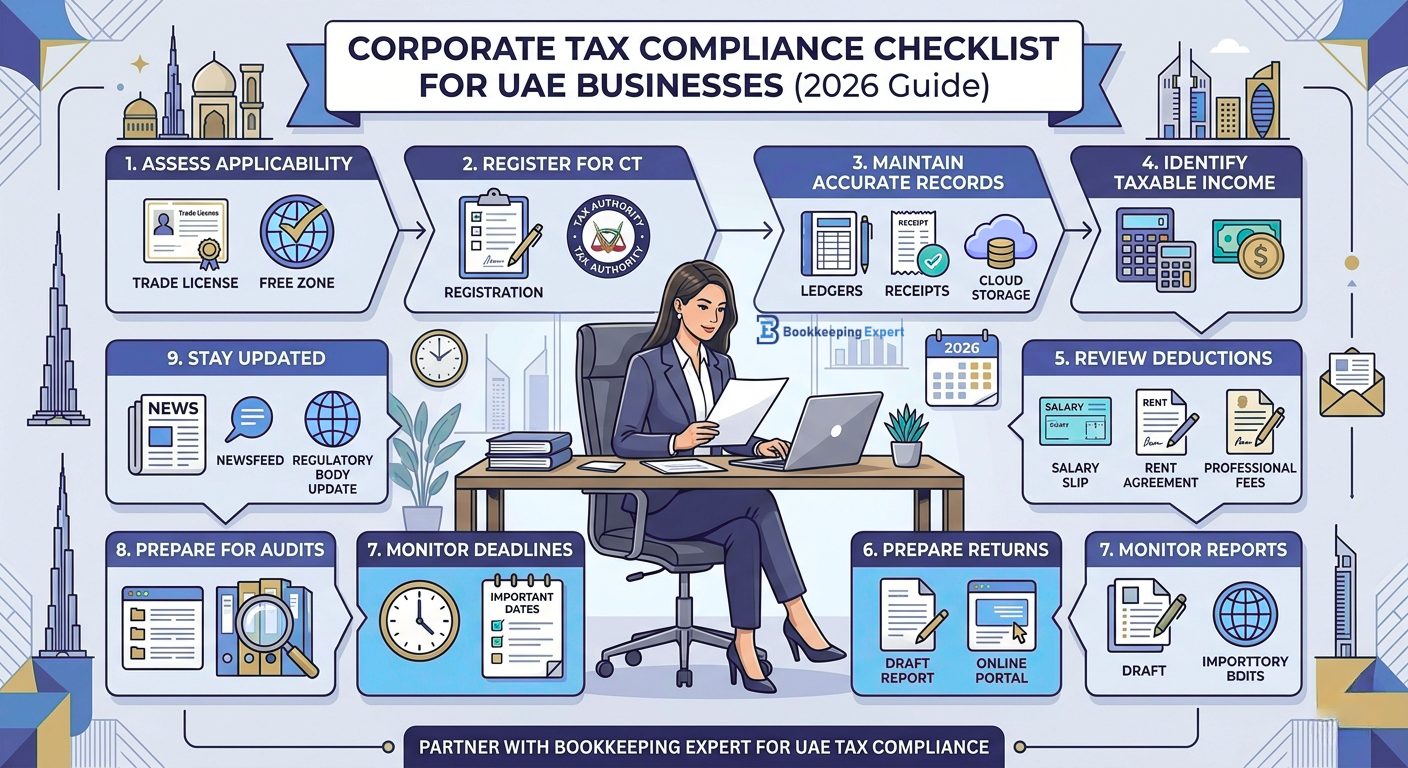
The introduction of corporate tax in the UAE has marked a significant shift in the country’s business environment. For decades, the UAE was known for its minimal tax framework, attracting entrepreneurs and global investors. However, with the implementation of corporate tax regulations, businesses now need to adopt structured financial practices and ensure full compliance with tax requirements.
For many companies, navigating corporate tax obligations can seem complex. Missing deadlines, inaccurate records, or misunderstanding tax rules can lead to penalties and financial risks. That’s why having a clear corporate tax compliance checklist is essential for businesses operating in the UAE.
This guide outlines the key steps every company should follow to remain compliant and avoid costly mistakes.
Understanding Corporate Tax in the UAE
Corporate tax in the UAE applies to business profits exceeding the designated threshold set by the government. The tax system aims to align the UAE with global tax standards while maintaining a competitive business environment.
Businesses operating in the mainland, as well as many entities within free zones, must evaluate their tax obligations and determine whether they fall within the scope of corporate tax regulations.
Compliance requires proper financial documentation, accurate reporting, and timely submission of tax filings.
Step 1: Determine Whether Your Business Is Subject to Corporate Tax
The first step in compliance is understanding whether your company is required to register for corporate tax.
Businesses generally subject to corporate tax include:
-
Mainland companies conducting commercial activities
-
Certain free zone entities depending on qualifying income
-
Foreign companies generating income within the UAE
Some entities may benefit from exemptions or special provisions, but it is essential to assess your eligibility carefully.
Step 2: Register for Corporate Tax
Businesses that fall under corporate tax regulations must complete corporate tax registration with the relevant tax authority.
Registration typically requires submitting details such as:
-
Trade license information
-
Business ownership structure
-
Financial activity description
-
Contact and identification details
Completing this step early helps businesses avoid delays or compliance issues later.
Step 3: Maintain Accurate Financial Records
Proper bookkeeping is the backbone of corporate tax compliance. Businesses must maintain detailed and organized financial records that accurately reflect their income and expenses.
Essential financial documents include:
-
Profit and loss statements
-
Balance sheets
-
Invoices and receipts
-
Payroll records
-
Bank statements
Accurate bookkeeping ensures transparency and simplifies the tax filing process.
Step 4: Identify Taxable Income
Calculating taxable income is a critical step in corporate tax compliance.
This involves determining:
-
Total revenue generated by the business
-
Allowable business expenses
-
Adjustments required under UAE tax regulations
Not all income is treated the same way for tax purposes, so understanding how to classify financial activities correctly is essential.
Step 5: Review Deductible Expenses
Certain business expenses may be deductible when calculating taxable profits.
Common deductible expenses may include:
-
Operational costs
-
Employee salaries and benefits
-
Office rent and utilities
-
Professional service fees
-
Marketing and advertising expenses
Ensuring that deductions are properly documented helps reduce tax liability while remaining compliant with regulations.
Step 6: Prepare Corporate Tax Returns
Once taxable income is calculated, businesses must prepare and submit corporate tax returns within the required deadlines.
This process typically includes:
-
Reviewing financial statements
-
Confirming tax calculations
-
Preparing supporting documentation
-
Filing the tax return through the official tax portal
Timely filing is essential to avoid penalties.
Step 7: Monitor Compliance Deadlines
Tax compliance involves more than just filing returns. Businesses must stay aware of key deadlines for registration, reporting, and payments.
Missing a deadline can result in fines, penalties, or additional scrutiny from regulatory authorities.
Creating a compliance calendar can help ensure all obligations are met on time.
Step 8: Ensure Proper Documentation for Audits
Tax authorities may request documentation or conduct audits to verify compliance.
Businesses should maintain organized records that demonstrate:
-
Accurate financial reporting
-
Legitimate business expenses
-
Proper calculation of taxable income
Maintaining these records for the required period ensures your company is prepared for any review.
Step 9: Stay Updated with Tax Regulations
Tax regulations evolve as governments refine their frameworks and align with international standards.
Businesses should regularly review updates related to:
-
Corporate tax rules
-
Compliance requirements
-
Reporting standards
-
Documentation guidelines
Staying informed helps businesses adapt quickly and avoid unexpected compliance issues.
The Role of Professional Accounting Support
Corporate tax compliance can be complex, especially for growing businesses managing multiple financial responsibilities. Professional accounting and bookkeeping services can help simplify compliance by ensuring accurate financial records and proper tax preparation.
Expert support helps businesses:
-
Maintain compliant financial documentation
-
Calculate taxable income accurately
-
Meet corporate tax deadlines
-
Reduce compliance risks
Final Thoughts
The introduction of corporate tax in the UAE has transformed the financial responsibilities of businesses operating in the region. While the regulations may seem challenging at first, a structured compliance checklist can make the process much more manageable.
By maintaining accurate financial records, understanding tax obligations, and staying aware of deadlines, businesses can ensure smooth compliance while focusing on growth and profitability.
At Bookkeeping Expert, we support UAE businesses with professional bookkeeping, accounting, and tax compliance services designed to keep your company fully aligned with regulatory requirements while helping you build a stronger financial future.
