
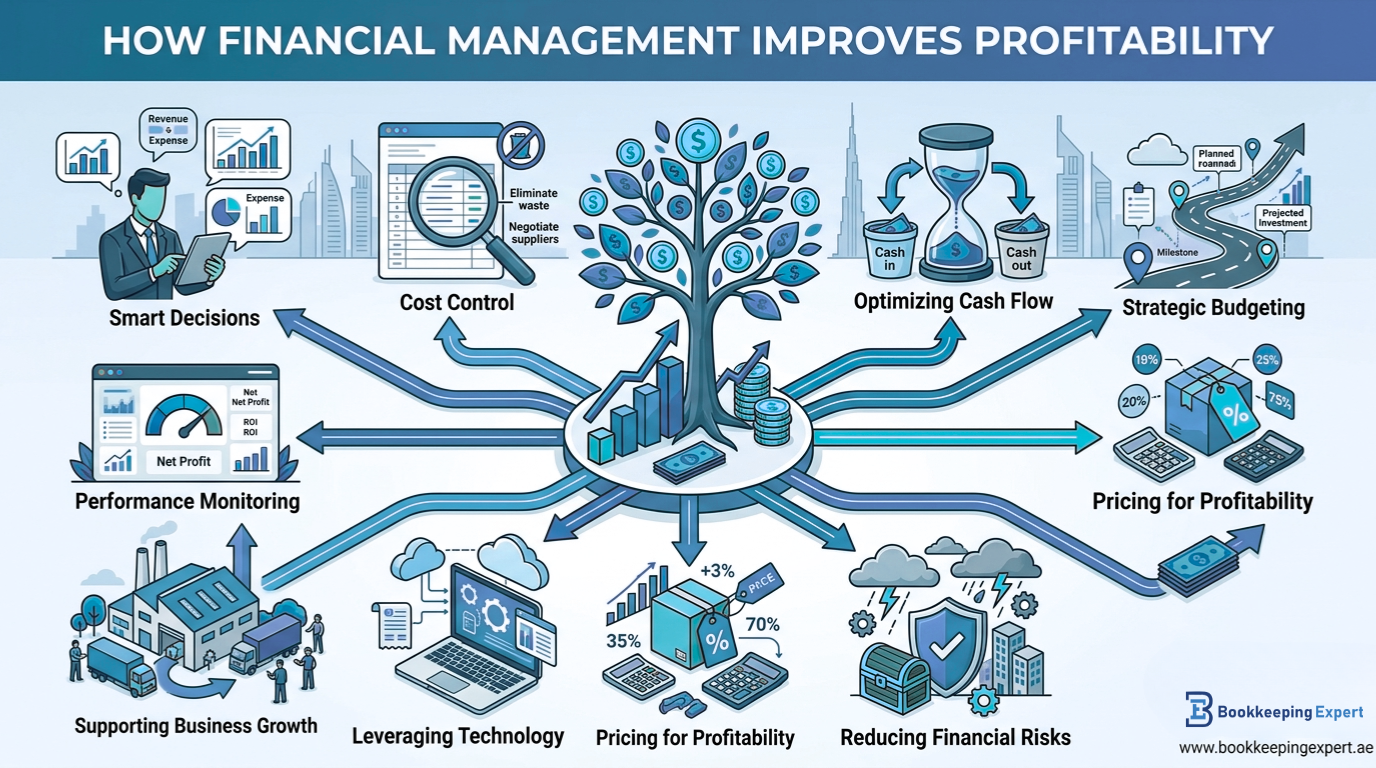
Profitability isn’t just about increasing sales—it’s about how effectively a business manages, allocates, and optimizes its financial resources. In today’s competitive landscape, strong financial management acts as a strategic engine that drives sustainable growth and higher profits.
Let’s explore how modern financial management can transform your bottom line.
1. Turning Data into Smart Decisions
Financial management gives you a clear picture of where your money is coming from and where it’s going. Instead of relying on guesswork, businesses can:
-
Analyze revenue streams
-
Identify high-performing products or services
-
Detect unnecessary expenses
With accurate financial insights, decision-making becomes faster, smarter, and more profitable.
2. Cost Control Without Compromising Growth
One of the most direct ways to improve profitability is by controlling costs. Effective financial management helps you:
-
Track operational expenses in real time
-
Eliminate wasteful spending
-
Negotiate better supplier terms
The goal isn’t just to cut costs—but to spend strategically where it matters most.
3. Optimizing Cash Flow
A profitable business can still struggle if cash flow is poorly managed. Financial management ensures:
-
Timely collection of receivables
-
Efficient management of payables
-
Proper cash reserves for emergencies
Healthy cash flow allows businesses to operate smoothly and seize growth opportunities without financial stress.
4. Strategic Budgeting and Forecasting
Budgeting is no longer a static annual exercise—it’s a dynamic tool for growth. With proper financial planning, businesses can:
-
Set realistic financial goals
-
Anticipate future expenses and revenues
-
Adjust strategies based on performance trends
Forecasting helps you stay ahead rather than react to financial challenges.
5. Pricing for Profitability
Pricing decisions directly impact profit margins. Financial management helps businesses:
-
Understand true cost per product or service
-
Set competitive yet profitable prices
-
Analyze profit margins across offerings
This ensures that every sale contributes meaningfully to your bottom line.
6. Reducing Financial Risks
Unmanaged risks can quickly erode profits. Strong financial systems help:
-
Detect irregularities or fraud
-
Ensure compliance with regulations
-
Prepare for economic fluctuations
Risk management protects your profits and builds long-term stability.
7. Leveraging Technology for Efficiency
Modern financial management uses cloud-based tools and automation to:
-
Reduce manual errors
-
Speed up reporting processes
-
Provide real-time financial visibility
This efficiency not only saves time but also reduces operational costs.
8. Supporting Business Growth
As your business grows, financial complexity increases. Effective management ensures:
-
Scalable financial systems
-
Better investment decisions
-
Clear visibility into expansion opportunities
Growth becomes more controlled, strategic, and profitable.
9. Performance Monitoring and Continuous Improvement
Regular financial reviews help businesses stay on track. By monitoring key performance indicators (KPIs), you can:
-
Measure profitability trends
-
Identify areas for improvement
-
Adjust strategies proactively
Continuous improvement is the key to long-term profitability.
Final Thoughts
Financial management is more than just balancing books—it’s about building a foundation for sustainable profitability. By controlling costs, optimizing cash flow, and making data-driven decisions, businesses can unlock their full financial potential.
At Bookkeeping Expert, we believe that smart financial management isn’t just a function—it’s a competitive advantage. With the right systems and insights in place, profitability becomes not just a goal, but a consistent outcome.
