
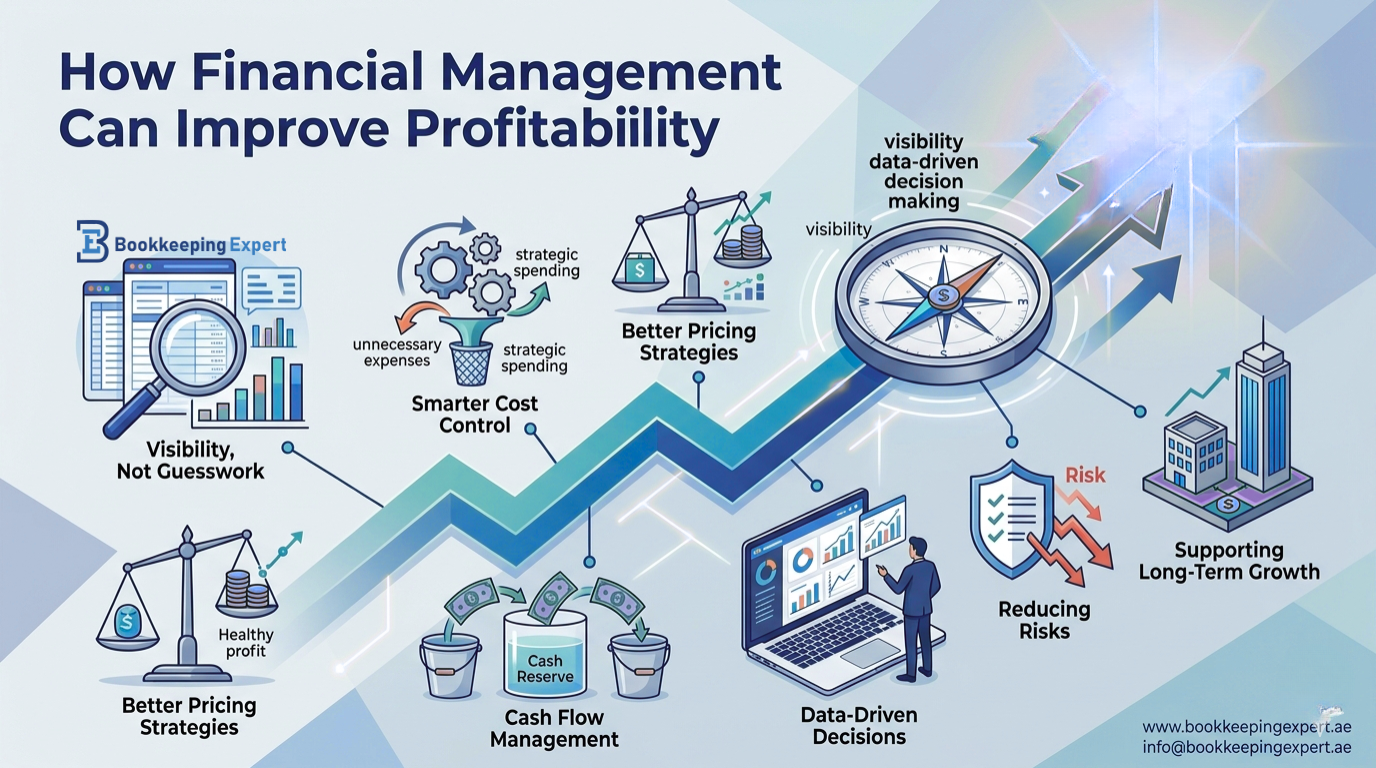
Profitability isn’t just about increasing sales—it’s about how effectively a business manages what it earns, spends, and reinvests. Many businesses focus heavily on revenue growth but overlook the systems behind their finances. The result? High sales, but low profits.
Strong financial management changes that narrative. It transforms raw numbers into actionable insights and gives businesses the clarity needed to grow sustainably and profitably.
Profit Starts with Visibility, Not Guesswork
One of the biggest barriers to profitability is lack of financial clarity. Without accurate, up-to-date records, business owners often rely on assumptions rather than facts. This can lead to overspending, underpricing, or missed opportunities.
Effective financial management ensures you always know:
-
Where your money is coming from
-
Where it’s going
-
Which areas of your business are actually profitable
When you can see the full picture, smarter decisions naturally follow.
Smarter Cost Control Without Cutting Corners
Improving profitability doesn’t always mean drastic cost-cutting—it means strategic spending. Financial management helps identify unnecessary expenses, inefficient processes, and areas where costs can be optimized without affecting quality.
For example, regular financial reviews may reveal:
-
Subscriptions or services you no longer use
-
Operational inefficiencies increasing overhead
-
Vendors that can be renegotiated
These small adjustments can significantly boost your bottom line over time.
Better Pricing Strategies
Many businesses struggle with pricing—not because they lack market knowledge, but because they lack financial insight.
With proper financial management, you can:
-
Understand your true cost per product or service
-
Set prices that ensure healthy margins
-
Avoid underpricing that eats into profits
Profitability improves when pricing decisions are backed by real data, not just competition or intuition.
Cash Flow: The Backbone of Profitability
A business can be profitable on paper and still fail due to poor cash flow. Managing cash flow effectively ensures that you have enough liquidity to meet obligations, invest in growth, and avoid unnecessary borrowing.
Financial management helps you:
-
Forecast cash inflows and outflows
-
Plan for seasonal fluctuations
-
Maintain a healthy cash reserve
When cash is managed well, profitability becomes sustainable—not just temporary.
Data-Driven Decision Making
Growth decisions—like hiring, expanding, or investing—carry financial risk. Without proper data, these decisions can hurt profitability instead of improving it.
Financial management provides:
-
Real-time financial reports
-
Budget vs. actual performance comparisons
-
Profitability analysis by product, service, or segment
This allows you to invest in what works and eliminate what doesn’t.
Reducing Financial Risks
Unexpected financial issues—tax penalties, compliance errors, or unplanned expenses—can quickly erode profits.
With structured financial management:
-
Compliance is maintained
-
Deadlines are met
-
Financial risks are minimized
This protects your profits and ensures stability.
Supporting Long-Term Growth
Profitability isn’t just about short-term gains—it’s about building a business that thrives over time. Strong financial systems allow you to scale confidently, knowing your foundation is solid.
Whether it’s expanding into new markets or launching new services, financial management ensures that growth is both controlled and profitable.
Final Thoughts
Financial management is not just an administrative function—it’s a strategic advantage. Businesses that treat their finances as a tool rather than a task are the ones that consistently outperform their competition.
For companies working with experts like www.bookkeepingexpert.ae, the goal isn’t just to track numbers—it’s to use them to unlock higher profitability, smarter decisions, and long-term success.
When your finances are clear, your path to profit becomes clearer too.
