
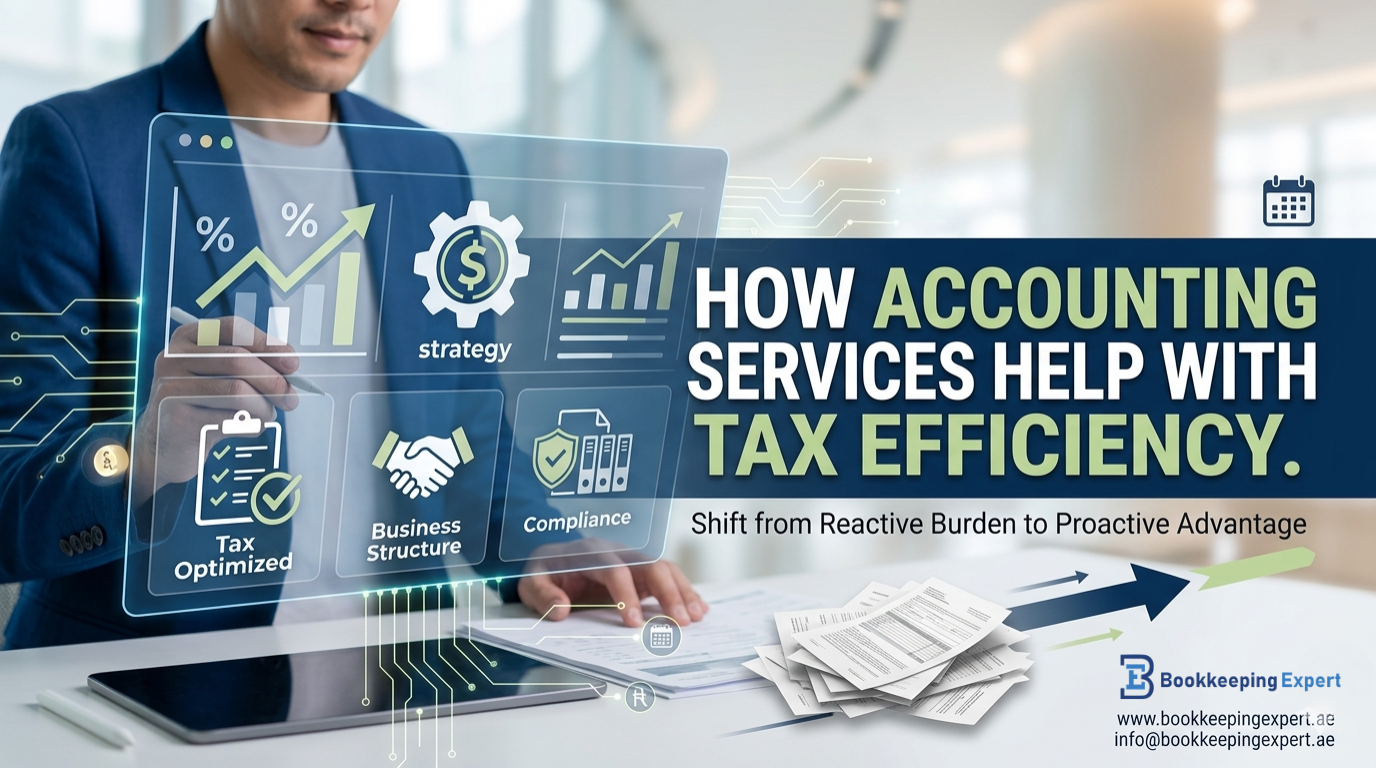
Tax efficiency isn’t about paying the least tax possible—it’s about paying the right amount, at the right time, using the right structure. Yet many businesses treat taxes as a once-a-year obligation instead of an ongoing strategy. That approach often leads to missed opportunities, unnecessary liabilities, and last-minute stress.
Modern accounting services shift tax from a reactive burden to a proactive advantage.
Beyond Compliance: Turning Tax into Strategy
Filing returns on time is just the baseline. True tax efficiency comes from planning ahead—structuring transactions, timing expenses, and optimizing reporting throughout the year.
Professional accounting services help businesses:
-
Identify allowable deductions and credits
-
Plan transactions to minimize tax exposure
-
Align financial decisions with tax implications
-
Stay compliant while optimizing outcomes
It’s not about shortcuts—it’s about smart structuring.
Real-Time Financial Visibility Means Smarter Tax Decisions
Tax efficiency depends heavily on timing. Without up-to-date financial data, businesses often make decisions blindly.
With structured accounting systems in place, you can:
-
Track income and expenses in real time
-
Forecast tax liabilities before deadlines
-
Adjust strategies before it’s too late
This visibility allows businesses to act early rather than react late.
Structuring Your Business the Right Way
The way your business is structured directly impacts how much tax you pay. From sole proprietorships to corporations, each setup carries different tax implications.
Accounting professionals evaluate:
-
Whether your current structure is tax-efficient
-
Opportunities to restructure as your business grows
-
Jurisdiction-specific regulations and benefits
In regions like the UAE, where tax frameworks are evolving, staying updated is essential for maintaining efficiency.
Maximizing Deductions Without Risk
Many businesses either:
-
Miss legitimate deductions, or
-
Overclaim and risk penalties
Accounting services strike the balance by ensuring:
-
All eligible expenses are properly recorded
-
Documentation is accurate and audit-ready
-
Claims are compliant with current regulations
This reduces risk while maximizing savings.
Managing Cash Flow with Tax in Mind
Tax efficiency isn’t just about how much you pay—it’s about when you pay.
Strategic accounting helps:
-
Defer liabilities where legally possible
-
Plan payments to avoid cash flow strain
-
Align tax obligations with revenue cycles
This approach keeps your business financially flexible.
Staying Ahead of Changing Tax Regulations
Tax laws are not static. Updates, reforms, and new compliance requirements can impact your business without much notice.
Working with a specialized provider like Bookkeeping Expert ensures:
-
Continuous monitoring of regulatory changes
-
Accurate application of new tax rules
-
Reduced risk of non-compliance penalties
Instead of scrambling to keep up, your business stays prepared.
Turning Data into Tax Insights
Modern accounting isn’t just about recording transactions—it’s about interpreting them.
With the right expertise, your financial data can reveal:
-
Inefficient spending patterns
-
Opportunities for tax optimization
-
Areas where restructuring could reduce liabilities
These insights help you make smarter financial decisions year-round.
Tax Efficiency Is a Continuous Process
The biggest misconception about tax is that it’s seasonal. In reality, it’s ongoing. Every financial decision—from hiring to investing—has tax implications.
Businesses that integrate accounting into their strategy:
-
Avoid last-minute surprises
-
Improve financial predictability
-
Gain better control over their obligations
Final Thoughts
Tax efficiency isn’t achieved through quick fixes—it’s built through consistent, informed financial management. Accounting services provide the structure, visibility, and expertise needed to make that possible.
When done right, tax planning becomes less about stress and more about strategy—helping your business grow with confidence in a constantly evolving financial landscape.
