
Managing a business comes with many moving parts, but nothing dictates your long-term success quite like the accuracy of your numbers. Yet, many business owners treat bank reconciliation as a dreaded end-of-year chore, or worse, skip it altogether.
In reality, waiting until tax season to reconcile your accounts is like driving a car and only looking at the dashboard once a year. Regular reconciliations—whether weekly or monthly—are the pulse check your business needs to stay afloat and thrive.
Here is how keeping your books closely matched with your bank statements directly improves your business’s financial health, brought to you by Bookkeeping Expert.
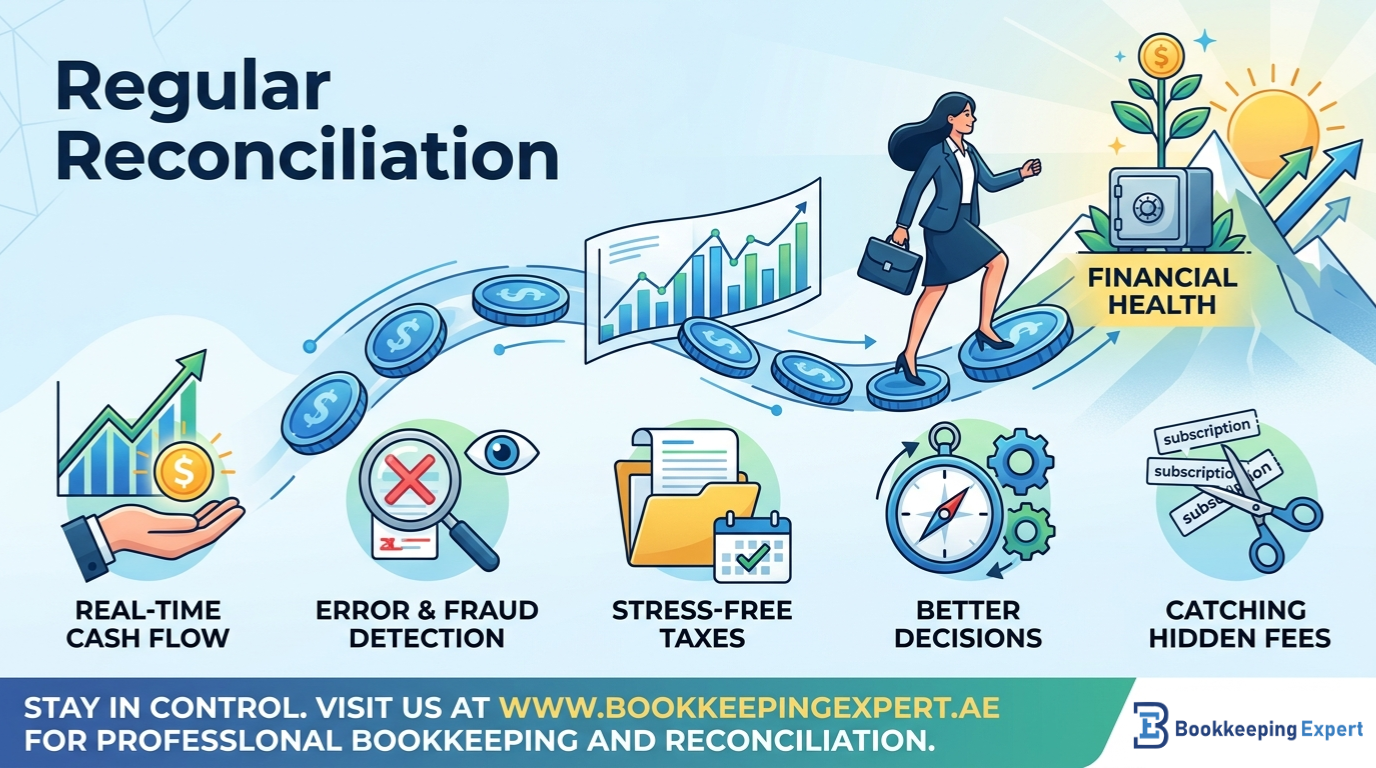
1. Real-Time Cash Flow Clarity
You check your online banking app, and it shows a healthy balance. But is that money actually available to spend? Not necessarily.
Outstanding checks, pending debit card transactions, and automated recurring payments that haven't cleared yet can skew your perspective. Regular reconciliation Bridges the gap between your bank balance and your true book balance. When you know exactly how much cash you have, you can confidently make decisions about hiring, inventory purchasing, and growth.
2. Early Detection of Errors and Fraud
Human errors happen. A vendor might accidentally charge you twice for a single invoice, or your internal team might miskey a decimal point. More critically, unauthorized transactions or internal fraud can go unnoticed if statements aren't reviewed regularly.
By cross-referencing your books with bank and credit card statements at frequent intervals, you can catch discrepancies immediately. The sooner you spot a fraudulent charge or a banking error, the easier it is to dispute it and recover your funds.
3. Stress-Free Tax Seasons
We’ve all been there: the scramble to find missing receipts and explain mysterious transactions from eight months ago as the tax filing deadline looms.
When you prioritize regular reconciliations, your financial data is continually validated and organized. When tax season arrives, your books are already accurate, complete, and ready for your accountant. This saves you hours of panic and heavily reduces your CPA or tax preparation fees.
4. Better Financial Decision-Making
Imagine presenting your financial statements to investors or applying for a business loan with inaccurate or outdated figures. Financial institutions and stake-holders require reliable, reconciled data.
Regularly reconciled books give you clean, accurate Profit & Loss (P&L) statements and Balance Sheets. With trustworthy financial reports, you can identify which areas of your business are draining cash, which products yield the highest margins, and where you need to pivot.
5. Catching Forgotten Subscriptions and Hidden Fees
"Subscription creep" is a silent killer of business profitability. It’s easy to sign up for a software trial, forget to cancel it, and let small monthly fees drain your accounts over time.
During the reconciliation process, you review every single line item. This forces you to confront unnecessary expenditures—like bank maintenance fees, old software subscriptions, or duplicate vendor charges—allowing you to cut unnecessary costs immediately.
Make Reconciliation a Priority Today
Financial health isn't just about how much revenue you bring in; it’s about how carefully you manage what you have. Regular reconciliations give you the control, confidence, and clarity required to scale your business sustainably.
If you find yourself falling behind on your books, or if you simply want to focus on core business operations while leaving the numbers to professionals, we are here to help.
Visit us at www.bookkeepingexpert.ae to explore our professional bookkeeping and reconciliation services tailored to your business needs. Let’s keep your financial health in perfect check!
