
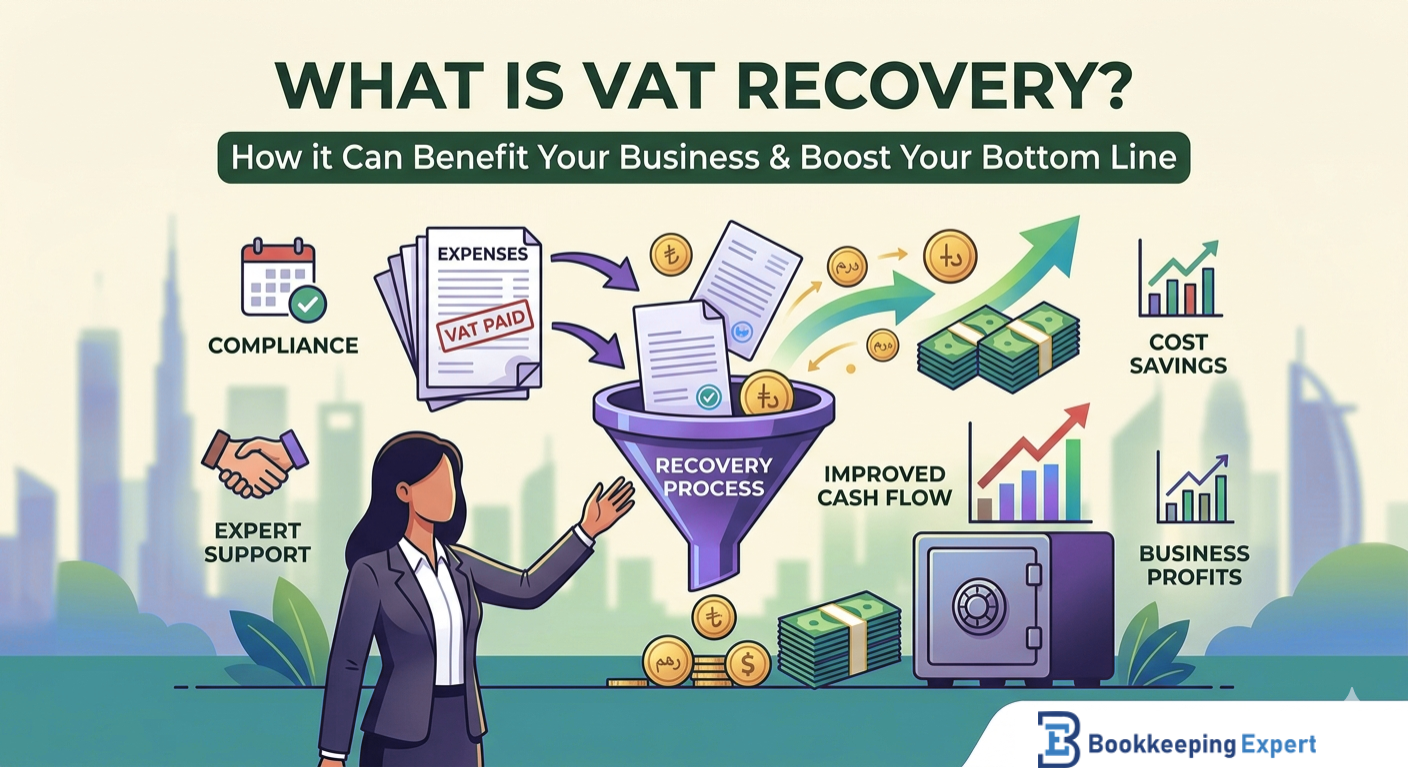
In a business landscape where every dirham counts, overlooking recoverable expenses can quietly drain your profits. One of the most underutilized opportunities for improving cash flow is VAT recovery—a process that, when handled correctly, can turn routine expenses into measurable financial gains.
But what exactly is VAT recovery, and why should your business care?
Understanding VAT Recovery in Simple Terms
VAT (Value Added Tax) is applied to most goods and services at each stage of the supply chain. As a business, you typically pay VAT on purchases (input VAT) and collect VAT on sales (output VAT).
VAT recovery is the process of reclaiming the VAT you’ve paid on eligible business expenses from the tax authorities.
In essence, it ensures you’re not absorbing tax costs that you’re legally allowed to recover.
Why VAT Recovery Matters More Than You Think
Many businesses treat VAT as a compliance requirement—but it’s much more than that. When managed strategically, VAT recovery becomes a tool for:
-
Improving cash flow
-
Reducing operational costs
-
Enhancing financial accuracy
-
Boosting overall profitability
Failing to recover eligible VAT is essentially leaving money on the table.
Common Expenses Eligible for VAT Recovery
While rules may vary depending on jurisdiction, businesses can typically recover VAT on:
-
Office supplies and utilities
-
Professional services (legal, accounting, consulting)
-
Business travel and accommodation (with conditions)
-
Equipment and technology purchases
-
Marketing and advertising expenses
However, not all expenses qualify—understanding the nuances is key to maximizing claims without risking non-compliance.
The Hidden Challenges of VAT Recovery
Despite its benefits, VAT recovery isn’t always straightforward. Businesses often struggle with:
-
Incomplete or incorrect documentation
-
Misclassification of expenses
-
Missed deadlines for claims
-
Changing tax regulations
-
Complex eligibility rules
Even small errors can lead to rejected claims or penalties, which is why accuracy is critical.
How VAT Recovery Strengthens Financial Control
When integrated into your bookkeeping process, VAT recovery does more than just return money—it improves financial discipline.
-
Encourages proper record-keeping
-
Enhances visibility into expenses
-
Supports better budgeting decisions
-
Aligns your financial processes with compliance standards
It turns routine accounting into a strategic advantage.
Leveraging Technology for Smarter VAT Recovery
Modern businesses are moving away from manual tracking and embracing automation. Digital tools and cloud-based systems help:
-
Capture VAT data in real time
-
Categorize expenses accurately
-
Generate compliant reports
-
Reduce human error
This not only speeds up the recovery process but also ensures consistency and reliability.
Why Expert Support Makes a Difference
VAT regulations can be complex, especially in regions with evolving tax frameworks like the UAE. Partnering with professionals can help you:
-
Identify all eligible claims
-
Ensure compliance with local laws
-
Avoid costly mistakes
-
Save time and internal resources
With expert guidance, VAT recovery becomes seamless and stress-free.
Final Thoughts
VAT recovery isn’t just an accounting function—it’s a financial opportunity. Businesses that actively manage and optimize their VAT processes gain a clear edge in cash flow and cost efficiency.
If your business isn’t fully leveraging VAT recovery yet, now is the time to start. Because in today’s competitive environment, every recovered dirham contributes to stronger, smarter growth.
