
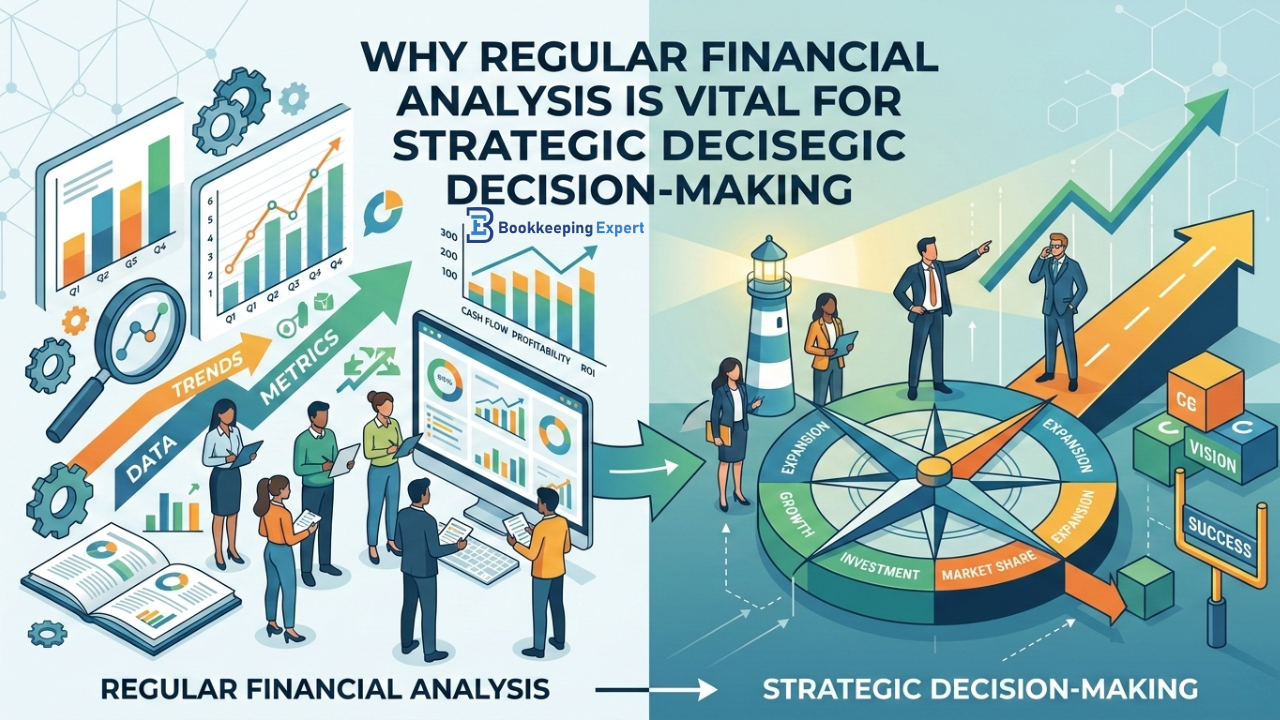
In a competitive and rapidly evolving business environment, decisions can no longer rely on intuition alone. Successful organizations base their strategies on accurate financial insights and data-driven analysis. This is where regular financial analysis becomes a powerful tool for guiding business direction.
Financial analysis transforms raw numbers into meaningful insights that help leaders understand performance, anticipate challenges, and identify opportunities for growth. When businesses consistently analyze their financial data, they gain the clarity needed to make smarter, faster, and more strategic decisions.
Turning Financial Data into Business Intelligence
Financial records such as income statements, balance sheets, and cash flow reports contain valuable information about a company’s performance. However, without proper analysis, these numbers remain underutilized.
Regular financial analysis helps businesses:
-
Identify revenue trends
-
Monitor operational costs
-
Evaluate profit margins
-
Assess financial health
By interpreting financial data effectively, businesses can convert routine reports into actionable intelligence that supports strategic planning.
Identifying Strengths and Weaknesses
One of the key benefits of regular financial analysis is the ability to uncover both strong and weak areas within the business.
For example, analysis may reveal:
-
Products or services generating the highest profits
-
Departments with excessive spending
-
Seasonal sales patterns
-
Inefficient operational processes
Recognizing these patterns allows management to reinforce successful strategies and correct underperforming areas before they escalate into major issues.
Improving Budgeting and Forecasting
Strategic decision-making relies heavily on accurate budgeting and forecasting. Without reliable financial insights, predicting future performance becomes extremely difficult.
Regular financial analysis enables businesses to:
-
Create realistic budgets
-
Forecast future revenues and expenses
-
Prepare for market fluctuations
-
Allocate resources more effectively
This level of financial visibility helps companies plan ahead with confidence rather than reacting to financial surprises.
Supporting Sustainable Business Growth
Growth requires careful financial planning. Expanding operations, launching new products, or entering new markets all involve financial risks.
Consistent financial analysis provides decision-makers with a clear understanding of:
-
Available capital
-
Profit sustainability
-
Investment capacity
-
Cost structures
With this information, businesses can pursue expansion opportunities while maintaining financial stability and operational balance.
Strengthening Cash Flow Management
Cash flow is the lifeblood of every business. Even profitable companies can struggle if cash flow is not monitored carefully.
Regular financial analysis allows businesses to:
-
Track incoming and outgoing cash
-
Identify potential cash shortages
-
Optimize payment cycles
-
Improve financial liquidity
Effective cash flow management ensures the business can meet obligations, invest in opportunities, and maintain operational continuity.
Enhancing Risk Management
Financial analysis plays a crucial role in identifying potential risks before they impact the business. By regularly reviewing financial reports, organizations can detect warning signs such as:
-
Declining profitability
-
Increasing debt levels
-
Rising operational costs
-
Inconsistent revenue streams
Early detection allows leadership teams to take proactive measures, helping businesses avoid financial instability and protect long-term performance.
Enabling Data-Driven Strategic Decisions
Modern businesses increasingly rely on data-driven strategies. Regular financial analysis provides the foundation for informed decision-making in areas such as:
-
Pricing strategies
-
Investment planning
-
Cost optimization
-
Resource allocation
When decisions are supported by reliable financial data, organizations are more likely to achieve sustainable growth and competitive advantage.
Building Investor and Stakeholder Confidence
Investors, lenders, and stakeholders expect transparency and strong financial management. Regular financial analysis demonstrates that a business is monitoring its financial performance and making responsible decisions.
Clear financial insights help businesses:
-
Present accurate financial reports
-
Support funding proposals
-
Strengthen stakeholder trust
-
Maintain financial credibility
This level of transparency enhances the organization’s reputation and long-term financial partnerships.
Integrating Financial Analysis into Daily Business Strategy
Financial analysis should not be treated as a one-time exercise at the end of the fiscal year. Instead, it should become a continuous process integrated into everyday business operations.
Companies that regularly review financial performance can:
-
Adapt quickly to market changes
-
Optimize operational efficiency
-
Align financial goals with business objectives
-
Maintain consistent profitability
This proactive approach ensures that financial insights consistently guide strategic decisions.
Final Thoughts
Regular financial analysis is essential for businesses seeking to make informed, strategic decisions in a dynamic marketplace. By evaluating financial data consistently, organizations gain deeper insights into their performance, identify opportunities for improvement, and manage risks more effectively.
In today’s data-driven economy, financial analysis is not just an accounting function—it is a strategic management tool that empowers businesses to grow confidently, allocate resources wisely, and build a resilient financial future.
