
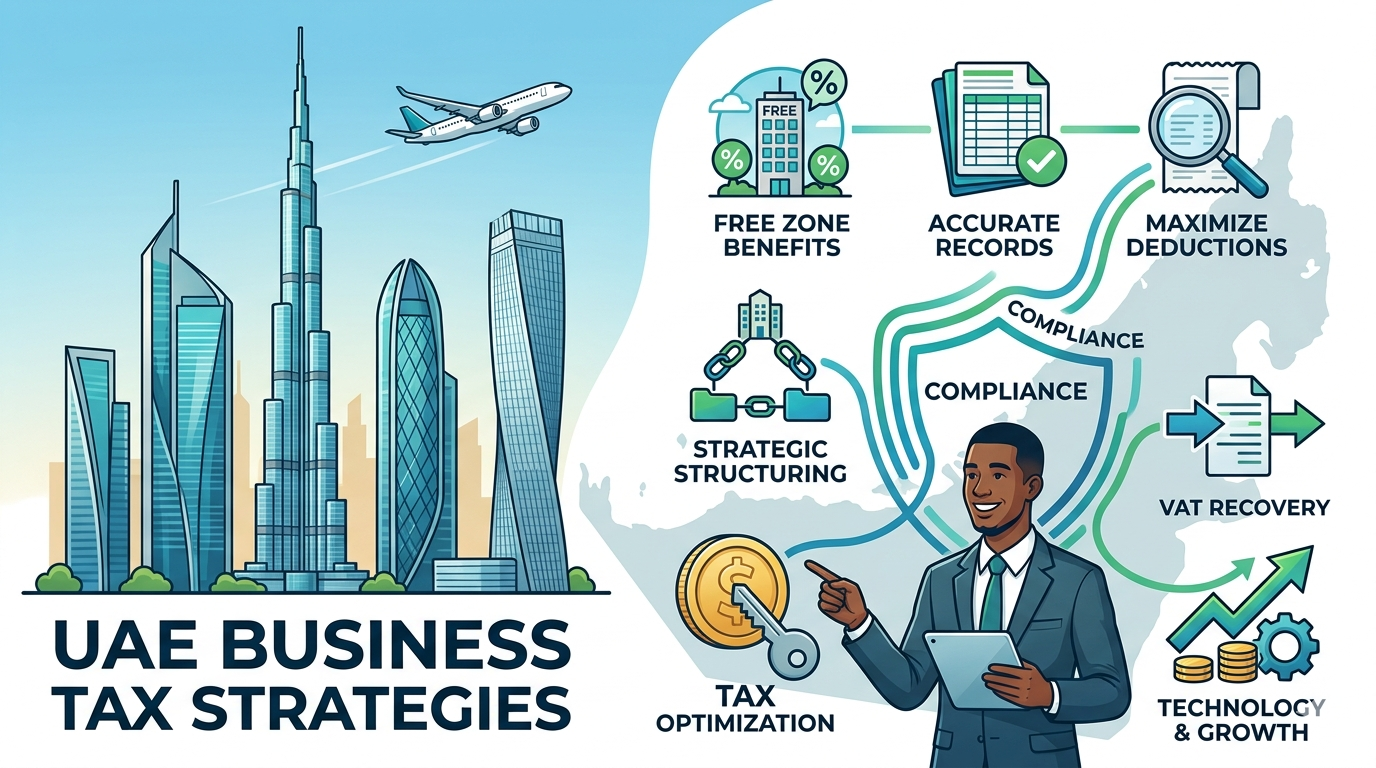
The United Arab Emirates has long been known for its business-friendly environment, attractive tax policies, and strong economic growth. However, with the introduction of corporate tax and evolving regulatory requirements, businesses must now take a more strategic approach to tax planning.
For companies operating in the UAE, tax efficiency is no longer just about compliance—it’s about making smart financial decisions that legally reduce tax liabilities while supporting long-term growth.
In this blog, we explore key tax-saving strategies that UAE businesses can implement to optimize their tax position while staying fully compliant with regulations.
Understanding the UAE Tax Landscape
The UAE has introduced several tax frameworks in recent years, including Value Added Tax (VAT) and corporate tax. While the overall tax rates remain competitive globally, businesses must ensure accurate financial reporting and proper tax planning.
Companies that proactively manage their tax strategies can reduce unnecessary liabilities and improve overall financial performance.
Key Tax-Saving Strategies for UAE Businesses
1. Take Advantage of Free Zone Benefits
Many UAE Free Zones offer significant tax advantages for qualifying businesses. Companies operating within eligible Free Zones may benefit from preferential tax treatment, provided they meet the required regulatory conditions.
Key benefits may include:
-
Reduced corporate tax obligations
-
Full foreign ownership
-
Simplified regulatory frameworks
-
Potential tax exemptions on certain income streams
However, businesses must ensure they comply with Free Zone regulations and maintain proper documentation to retain these benefits.
2. Maintain Accurate and Organized Financial Records
Proper bookkeeping plays a critical role in effective tax planning. Businesses with well-maintained financial records can:
-
Identify eligible deductions
-
Track expenses accurately
-
Prepare precise tax filings
-
Avoid compliance penalties
Maintaining organized financial statements also allows businesses to analyze their financial performance and uncover opportunities to optimize their tax position.
3. Maximize Legitimate Business Expense Deductions
One of the most effective ways to reduce taxable income is by claiming all eligible business expenses.
Common deductible expenses may include:
-
Office rent and utilities
-
Employee salaries and benefits
-
Professional services and consulting fees
-
Marketing and advertising costs
-
Technology and software subscriptions
-
Business travel expenses
Carefully documenting these expenses ensures they can be claimed during tax filing.
4. Implement Strategic Corporate Structuring
The way a business is structured can significantly impact its tax obligations.
For example, companies operating across multiple jurisdictions or services may benefit from:
-
Separate business entities
-
Holding company structures
-
Strategic profit allocation
Proper structuring can help businesses optimize tax efficiency while maintaining full compliance with regulatory requirements.
5. Utilize Input VAT Recovery
Businesses registered for VAT in the UAE can recover input VAT on eligible business expenses. Many companies miss out on potential VAT recoveries simply due to poor documentation or incorrect filings.
Ensuring accurate VAT tracking helps businesses:
-
Recover eligible VAT payments
-
Improve cash flow
-
Avoid filing errors
Regular VAT reviews can help identify missed recovery opportunities.
6. Invest in Technology and Business Infrastructure
Investments in technology, equipment, and infrastructure often qualify as business expenses. These investments can contribute to both operational efficiency and tax optimization.
Examples include:
-
Accounting software
-
Cloud platforms
-
Business equipment
-
Digital transformation tools
Such investments can reduce taxable income while improving productivity.
7. Plan Employee Compensation Efficiently
Employee compensation strategies can also influence tax planning. Businesses should structure compensation packages in a way that remains compliant while maintaining cost efficiency.
This may include:
-
Performance bonuses
-
Allowances
-
Structured benefits packages
Proper planning ensures businesses attract and retain talent while managing payroll costs effectively.
8. Conduct Regular Tax Reviews and Planning
Tax planning should not be limited to the end of the financial year. Businesses benefit from conducting regular tax reviews to monitor financial performance and identify tax-saving opportunities.
Periodic reviews help businesses:
-
Identify new deductions
-
Adjust financial strategies
-
Ensure ongoing compliance with tax regulations
Proactive planning allows companies to respond quickly to regulatory changes and optimize their financial strategy.
9. Work with Professional Bookkeeping and Tax Experts
Tax regulations can be complex, especially for businesses expanding across markets. Professional bookkeeping and tax experts can help companies:
-
Maintain accurate financial records
-
Prepare compliant tax filings
-
Identify strategic tax-saving opportunities
-
Ensure regulatory compliance
Partnering with experienced professionals helps businesses avoid costly mistakes and maintain efficient financial operations.
Final Thoughts
The UAE remains one of the most attractive destinations for businesses worldwide. However, with evolving tax regulations, companies must take a proactive approach to financial management and tax planning.
By implementing effective strategies—such as maintaining strong financial records, maximizing deductions, utilizing VAT recovery, and structuring operations strategically—businesses can significantly reduce their tax burden while staying compliant.
Smart tax planning is not about avoiding taxes—it’s about optimizing financial efficiency and supporting sustainable business growth.
For UAE businesses looking to strengthen their financial management and tax strategy, working with experienced bookkeeping professionals can provide the expertise needed to navigate the evolving tax landscape with confidence.
