
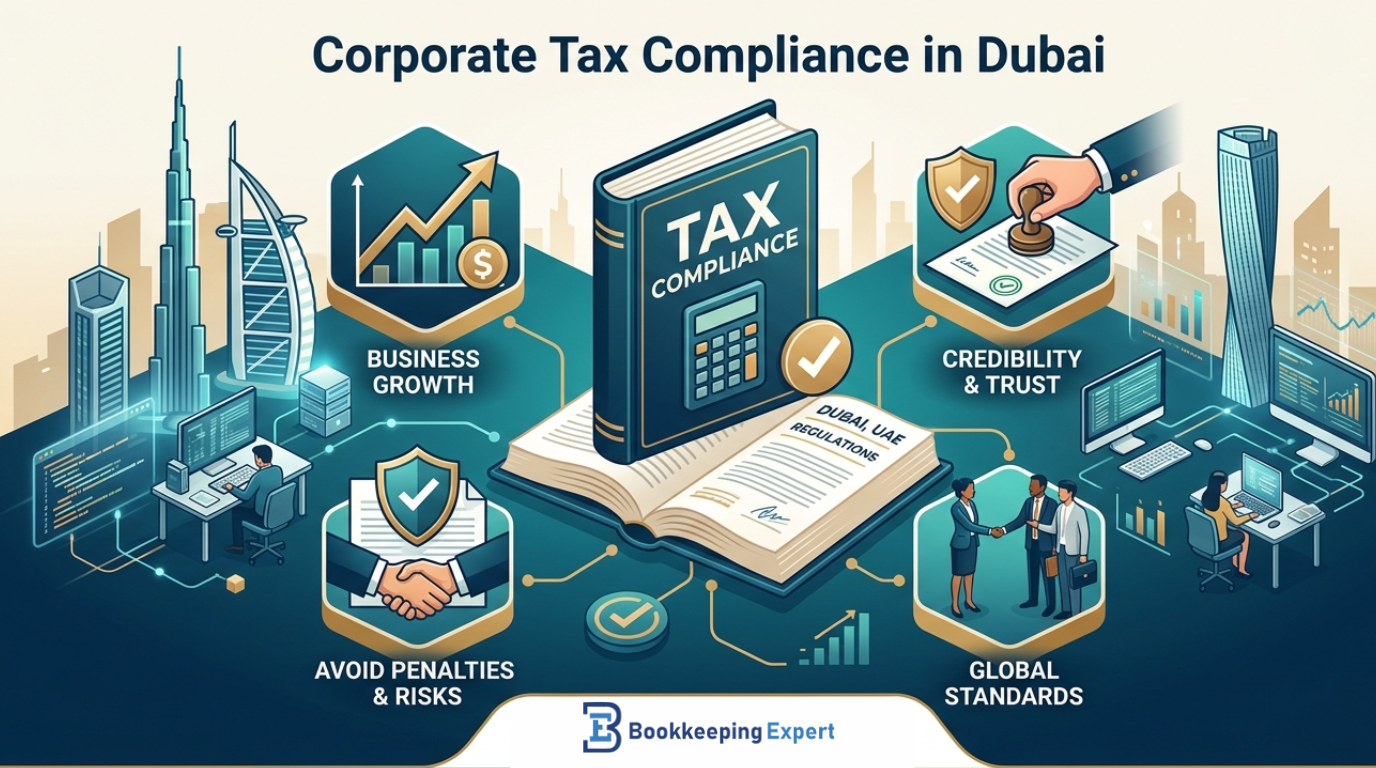
Dubai has long been recognized as a global business hub, attracting entrepreneurs and corporations with its strategic location, world-class infrastructure, and investor-friendly environment. However, with the introduction of corporate tax in the United Arab Emirates, businesses operating in Dubai are entering a new era—one where compliance is not optional, but essential.
Corporate tax compliance is no longer just about avoiding penalties. It’s about building credibility, ensuring sustainability, and positioning your business for long-term success in a regulated market.
Understanding Corporate Tax in Dubai
The UAE’s corporate tax framework marks a significant shift in the region’s financial landscape. Businesses must now:
-
Register for corporate tax
-
Maintain accurate financial records
-
File returns within specified deadlines
-
Adhere to applicable regulations
This transition has made compliance a core business function, rather than a periodic obligation.
Why Corporate Tax Compliance Matters
1. Avoiding Penalties and Legal Risks
Non-compliance can lead to fines, audits, and legal complications. Staying compliant ensures your business operates smoothly without unnecessary disruptions.
2. Enhancing Business Credibility
Compliance signals professionalism and transparency. Investors, banks, and partners are more likely to trust businesses that maintain proper financial and tax records.
3. Supporting Business Growth
When your financials are accurate and compliant, it becomes easier to:
-
Secure funding
-
Attract investors
-
Expand operations confidently
4. Aligning with Global Standards
Dubai is increasingly aligned with international tax practices. Compliance ensures your business meets global expectations, especially if you operate across borders.
5. Better Financial Management
Corporate tax compliance requires structured bookkeeping and reporting. This leads to:
-
Improved financial visibility
-
Smarter budgeting
-
Data-driven decision-making
The Role of Proper Bookkeeping
Accurate bookkeeping is the foundation of tax compliance. Without organized financial records, meeting corporate tax requirements becomes difficult and risky.
Key bookkeeping practices include:
-
Recording transactions consistently
-
Maintaining audit-ready documentation
-
Reconciling accounts regularly
-
Generating reliable financial reports
Businesses that invest in professional bookkeeping are far better equipped to handle compliance requirements efficiently.
Common Compliance Challenges Businesses Face
As companies adapt to the new tax environment in Dubai, several challenges have emerged:
-
Lack of awareness about regulations
-
Poor record-keeping practices
-
Missed deadlines
-
Misinterpretation of tax rules
Addressing these challenges early can prevent costly mistakes and ensure smooth operations.
Why Outsourcing Tax & Bookkeeping Makes Sense
Outsourcing has become a practical solution for businesses navigating corporate tax in Dubai. It offers:
-
Access to expert knowledge
-
Reduced risk of errors
-
Time and cost efficiency
-
Up-to-date compliance with evolving regulations
Professional support allows business owners to focus on growth while ensuring their tax obligations are handled accurately.
A Future-Ready Approach to Compliance
Corporate tax compliance is not just a regulatory requirement—it’s a strategic advantage. Businesses that embrace compliance early position themselves as reliable, scalable, and future-ready in Dubai’s competitive market.
At Bookkeeping Expert, we help businesses in Dubai stay compliant with confidence through accurate bookkeeping, proactive tax planning, and expert financial support. Because in today’s landscape, compliance isn’t a burden—it’s a foundation for success.
