
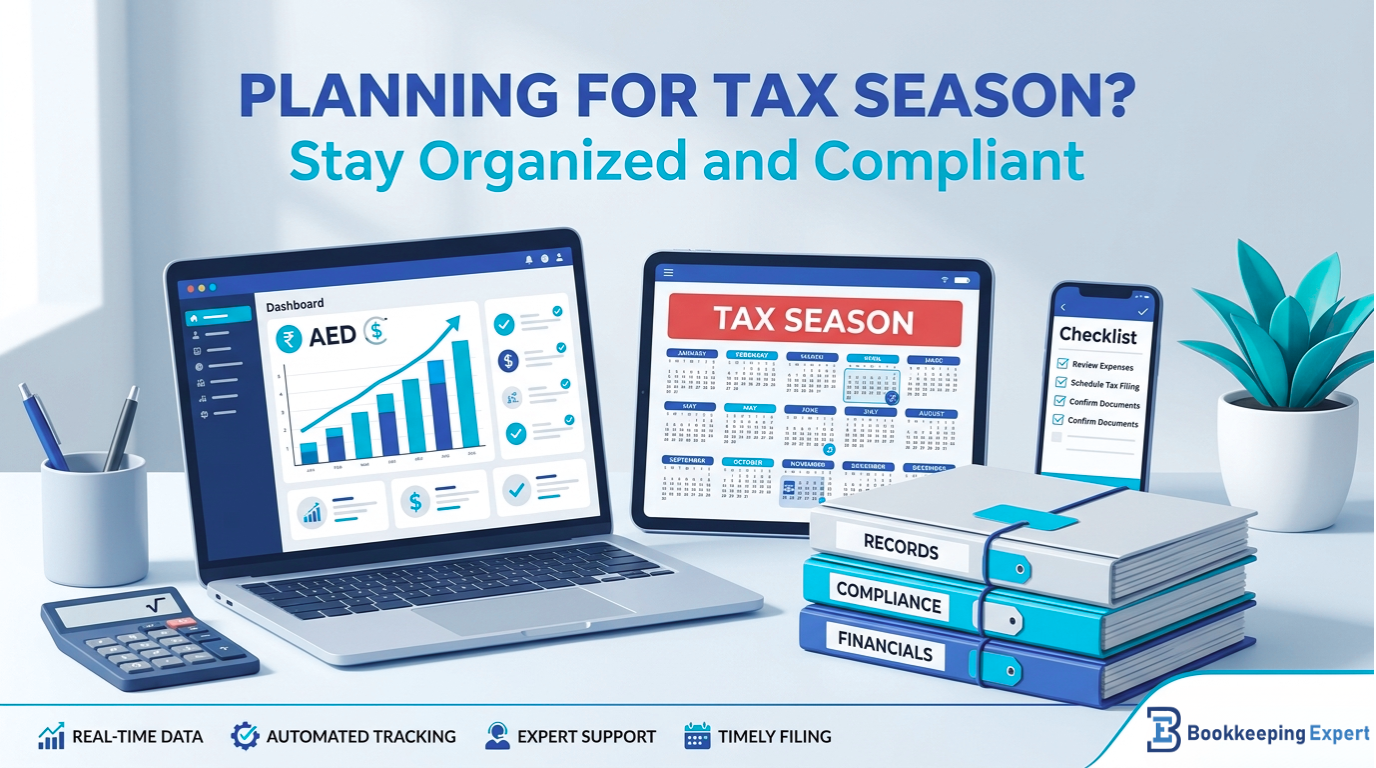
Tax season has a way of sneaking up on businesses. One moment you’re focused on growth, clients, and daily operations—and the next, you’re buried in receipts, deadlines, and compliance requirements. The stress isn’t just about paying taxes; it’s about being prepared, accurate, and audit-ready.
The difference between a chaotic tax season and a smooth one comes down to one thing: how well you plan ahead.
Why Tax Season Feels Overwhelming
For many businesses, tax season becomes stressful because records are scattered, processes are inconsistent, and deadlines feel rushed. Missing documents, last-minute calculations, and unclear regulations can quickly turn into costly mistakes.
But tax season doesn’t have to be reactive. With the right systems in place, it can become just another well-managed business cycle.
1. Build a System, Not a Last-Minute Routine
Waiting until the last minute is the fastest way to create errors. Instead, treat tax preparation as an ongoing process throughout the year.
Set up a system where:
-
Every transaction is recorded in real time
-
Receipts and invoices are stored immediately
-
Financial data is updated regularly
When your records are consistently maintained, tax filing becomes a simple review—not a major project.
2. Keep Your Financial Records Clean and Centralized
Disorganized data is one of the biggest obstacles during tax season. If your financial information is spread across spreadsheets, emails, and paper files, you’re more likely to miss important details.
Centralizing your records helps you:
-
Access documents quickly
-
Reduce duplication and errors
-
Stay prepared for audits
A single, reliable source of financial data makes compliance far easier.
3. Understand Your Tax Obligations Early
Tax compliance isn’t just about filing—it’s about knowing what applies to your business. Depending on your structure and location, you may have obligations related to VAT, corporate tax, or other regulatory requirements.
Staying informed allows you to:
-
Plan for upcoming liabilities
-
Avoid penalties and fines
-
Make better financial decisions throughout the year
Waiting until deadlines approach often leads to rushed and inaccurate filings.
4. Automate What You Can
Manual processes increase the risk of mistakes and consume valuable time. Automation can simplify everything from expense tracking to tax calculations.
With the right tools, you can:
-
Categorize transactions automatically
-
Generate tax-ready reports instantly
-
Track liabilities in real time
Automation reduces human error and keeps your data consistent.
5. Schedule Regular Financial Check-Ins
Don’t wait until tax season to review your numbers. Monthly or quarterly reviews help you stay on track and catch issues early.
During these check-ins:
-
Reconcile accounts
-
Review expenses and income
-
Identify discrepancies
This habit ensures that your financial data is always accurate and up to date.
6. Separate Personal and Business Finances
Mixing personal and business transactions creates confusion and complicates tax reporting. It also increases the risk of errors during audits.
Maintaining separate accounts:
-
Simplifies record-keeping
-
Improves transparency
-
Makes compliance easier
It’s a simple step that saves significant time and effort later.
7. Prepare for Deadlines in Advance
Deadlines shouldn’t be surprises. Create a tax calendar that includes all key filing dates and payment schedules.
This helps you:
-
Avoid last-minute stress
-
Prevent penalties
-
Allocate funds for tax payments in advance
Being proactive with deadlines keeps your business in control.
8. Work with Experts When Needed
As your business grows, tax requirements become more complex. Partnering with professionals ensures accuracy and compliance.
Experts can:
-
Interpret changing regulations
-
Optimize your tax position
-
Handle filings efficiently
This allows you to focus on running your business while staying compliant.
Final Thoughts
Tax season doesn’t have to be a scramble. With the right approach, it can be a structured, predictable process that supports your business rather than disrupts it.
Organization, consistency, and proactive planning are the keys to staying compliant and stress-free. When your financial systems are strong, tax season becomes less about pressure—and more about precision.
At www.bookkeepingexpert.ae, we believe that smart preparation leads to confident compliance. The earlier you start, the easier it gets.
