
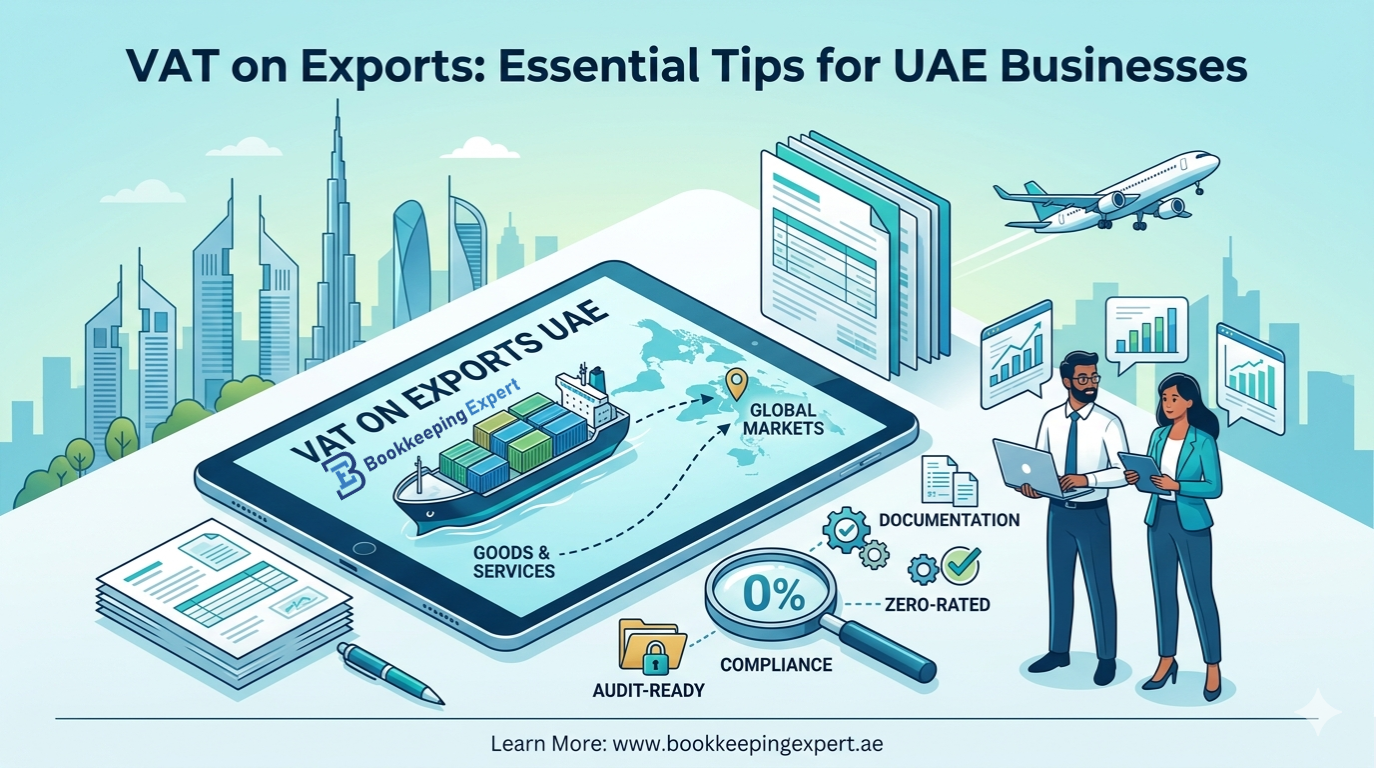
Expanding beyond borders is an exciting milestone for any business—but when it comes to VAT on exports in the UAE, excitement must be matched with precision. While exports are generally treated as zero-rated under UAE VAT law, the process isn’t as simple as applying a 0% rate and moving on. Documentation, compliance, and timing all play a critical role.
For businesses aiming to scale globally, understanding how VAT applies to exports can make the difference between smooth operations and costly penalties. Here’s a modern, practical guide to getting it right.
Zero-Rated Doesn’t Mean Zero Responsibility
In the UAE, most exports of goods and services are subject to a 0% VAT rate. This means you don’t charge VAT to your international customers—but you can still recover input VAT on related expenses.
However, applying the zero rate comes with strict conditions. Businesses must prove that the goods have actually left the UAE within the specified timeframe (typically 90 days). Without proper evidence, the transaction may be treated as a standard-rated supply.
Documentation Is Everything
The strength of your VAT position depends on your documentation. To support zero-rated exports, businesses should maintain:
-
Customs export declarations
-
Shipping and delivery documents
-
Commercial invoices
-
Proof of payment and customer details
Incomplete or inconsistent records can trigger audits and lead to VAT reassessments. A digital-first documentation system can help ensure everything is organized, accessible, and audit-ready.
Understand the Difference: Goods vs. Services
VAT treatment varies depending on whether you’re exporting goods or services.
-
Goods: Must physically leave the UAE within the required timeframe.
-
Services: Typically zero-rated if supplied to a non-resident outside the UAE, provided certain conditions are met (such as the place of use and benefit being outside the UAE).
Misclassifying a transaction can lead to compliance issues, so clarity here is essential.
Timing Can Impact Your VAT Position
Export timelines are not just operational—they’re regulatory. If goods are not exported within the allowed period, the zero-rating may no longer apply.
This makes coordination between logistics, finance, and compliance teams crucial. Delays in shipping or documentation can have direct tax consequences.
Leverage Technology for Compliance
Modern bookkeeping solutions can simplify VAT management significantly. With cloud-based systems, businesses can:
-
Track export transactions in real time
-
Store and retrieve supporting documents easily
-
Generate VAT-compliant reports instantly
Automation reduces the risk of human error and ensures that your VAT records align with regulatory expectations.
Stay Prepared for Audits
UAE tax authorities are increasingly focused on compliance and transparency. Businesses engaged in exports should be audit-ready at all times.
Regular internal reviews, reconciliations, and compliance checks can help identify gaps before they become problems. Being proactive not only protects your business but also builds credibility with regulators.
Work With Experts Who Understand UAE VAT
VAT regulations can be nuanced, especially when dealing with international transactions. Partnering with professionals who understand the UAE tax landscape ensures that your export processes are both compliant and optimized.
At Bookkeeping Expert, we help businesses navigate VAT complexities with confidence—offering tailored solutions that align with your growth ambitions.
Final Thoughts
Exporting opens doors to global markets—but it also introduces new layers of responsibility. By mastering VAT on exports, UAE businesses can protect their margins, maintain compliance, and scale internationally with confidence.
For expert guidance and seamless VAT management, visit www.bookkeepingexpert.ae and take control of your export strategy today.
