
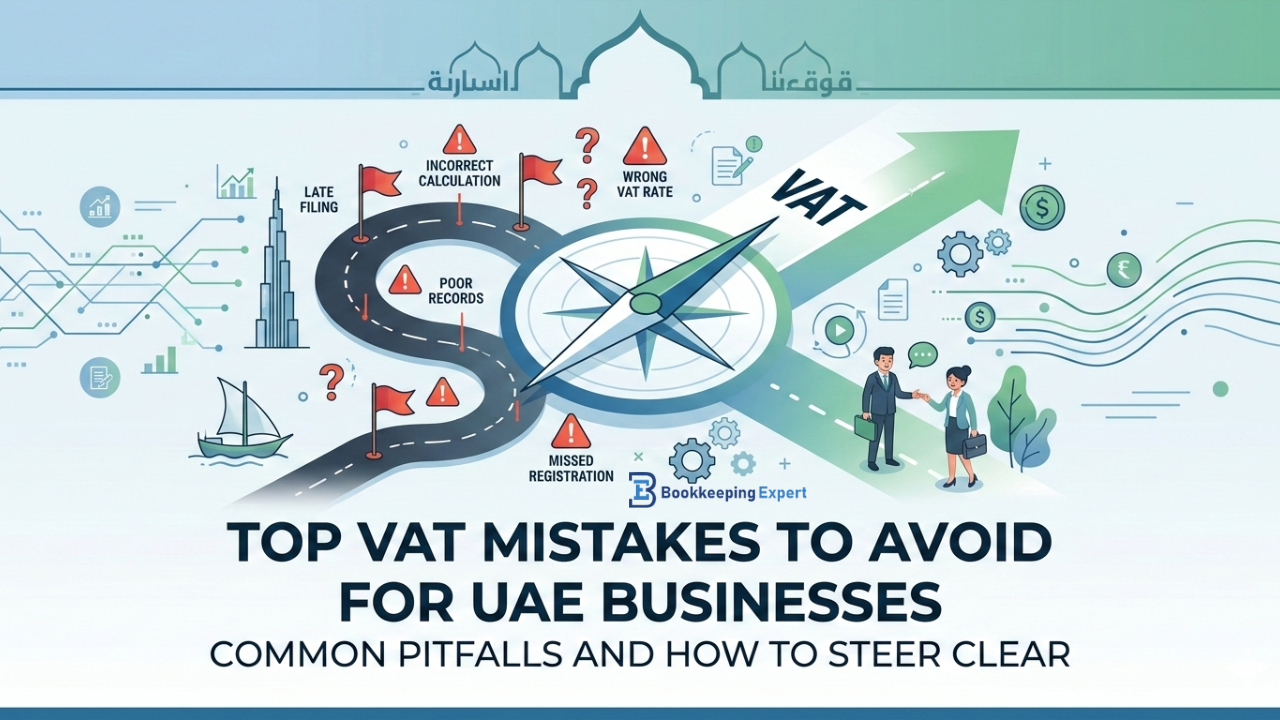
Since the introduction of Value Added Tax (VAT) in the United Arab Emirates, businesses have had to adjust their financial processes to remain compliant with tax regulations. While VAT compliance may appear straightforward, many companies—especially startups and SMEs—often make avoidable mistakes that can lead to penalties, audits, or operational disruptions.
Understanding the most common VAT errors can help businesses maintain compliance, improve financial accuracy, and avoid unnecessary risks. Below are some of the most frequent VAT mistakes UAE businesses make and practical ways to avoid them.
1. Late VAT Registration
One of the most common mistakes is delaying VAT registration after crossing the mandatory registration threshold. In the UAE, businesses must register for VAT once their taxable supplies exceed the required limit.
Failing to register on time can result in financial penalties and complications with tax filings.
How to Avoid It
Monitor your business revenue closely. If your taxable turnover approaches the VAT threshold, begin preparing for registration early to ensure compliance with UAE tax regulations.
2. Incorrect VAT Calculation
Errors in VAT calculations can occur due to incorrect tax rates, misunderstanding zero-rated and exempt supplies, or miscalculating VAT-inclusive prices.
These errors can lead to inaccurate VAT returns and potential penalties.
How to Avoid It
Use reliable accounting software and ensure that your finance team understands how VAT applies to your specific products or services. Regular reviews can also help catch errors before submitting VAT returns.
3. Missing or Incorrect Tax Invoices
A proper tax invoice is essential for VAT compliance in the UAE. Many businesses fail to include required details such as:
-
VAT registration number
-
Invoice date
-
VAT amount
-
Supplier and customer information
Incomplete or incorrect invoices can prevent VAT recovery and may result in compliance issues.
How to Avoid It
Implement standardized invoice templates that meet UAE VAT requirements and train staff to issue invoices correctly.
4. Poor Record Keeping
UAE tax regulations require businesses to maintain accurate financial records for several years. Some companies fail to properly store invoices, receipts, and transaction data.
Poor record management can create difficulties during audits or tax reviews.
How to Avoid It
Maintain organized digital records using accounting systems that securely store VAT-related documentation. Proper record management ensures transparency and easier reporting.
5. Incorrect Input VAT Claims
Input VAT refers to the tax businesses pay on purchases that can often be reclaimed. However, claiming VAT on ineligible expenses or without proper documentation can lead to penalties.
How to Avoid It
Ensure that only eligible expenses are included in VAT recovery claims and that all supporting documentation is available before submitting returns.
6. Missing VAT Filing Deadlines
VAT returns must be submitted within specific deadlines set by the tax authorities. Missing these deadlines can result in automatic fines.
How to Avoid It
Create a VAT calendar that tracks filing deadlines and payment due dates. Automated reminders can help businesses stay on schedule.
7. Not Reviewing VAT Reports Regularly
Many businesses prepare VAT reports only when filing deadlines approach. This reactive approach increases the chances of errors.
How to Avoid It
Review VAT reports regularly throughout the tax period. Frequent checks allow businesses to identify discrepancies early and correct them before submitting returns.
8. Managing VAT Without Professional Support
VAT regulations can be complex, especially for businesses dealing with international transactions, imports, exports, or multiple revenue streams.
Trying to manage VAT without professional expertise may increase the risk of non-compliance.
How to Avoid It
Working with experienced accounting professionals ensures accurate VAT calculations, timely filings, and compliance with UAE tax regulations.
Final Thoughts
VAT compliance is an essential responsibility for businesses operating in the UAE. Avoiding common VAT mistakes helps organizations maintain accurate financial records, reduce risks, and ensure smooth operations.
By implementing strong accounting practices, maintaining detailed documentation, and seeking expert guidance when needed, businesses can confidently manage VAT obligations while focusing on growth.
At Bookkeeping Expert, businesses in the UAE can access professional bookkeeping and VAT support services designed to simplify compliance and improve financial efficiency.
