
For many small business owners, corporate tax filing feels like stepping into unfamiliar territory—full of rules, deadlines, and numbers that must be exactly right. But once you understand the process, it becomes far less intimidating and far more manageable.
With the introduction of corporate tax in the UAE, small businesses now need to approach their finances with greater structure and awareness. The good news? Filing corporate tax isn’t as complicated as it seems when broken down into clear, actionable steps.
Understanding Corporate Tax in the UAE
Corporate tax is a direct tax applied to the net profits of businesses. In the UAE, it is governed by the Federal Tax Authority and applies to most business entities operating within the country.
Small businesses, startups, and freelancers must determine whether they meet the taxable income threshold and ensure they comply with registration and filing requirements.
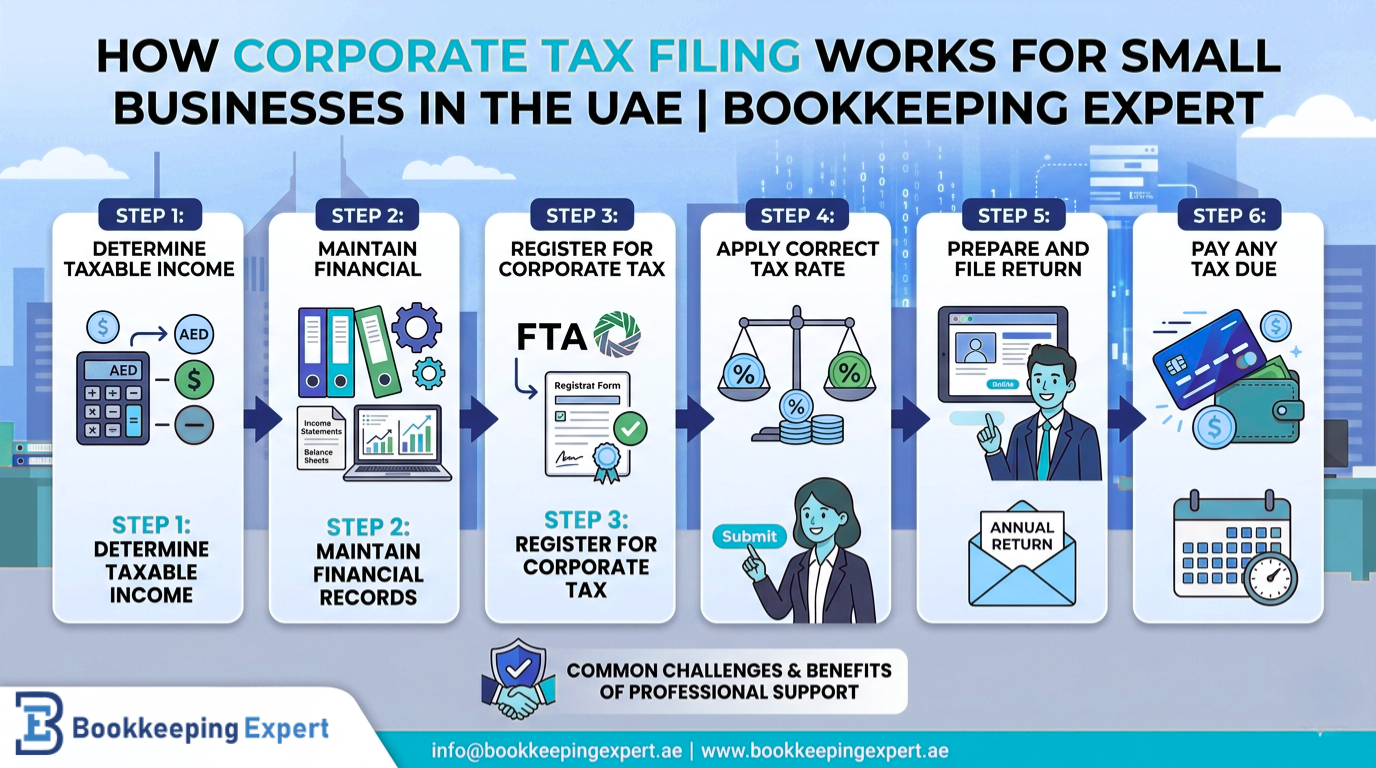
Step 1: Determine Your Taxable Income
The first step in corporate tax filing is calculating your taxable income. This is not your total revenue—it’s your profit after deducting allowable business expenses such as:
-
Operating costs
-
Salaries and wages
-
Rent and utilities
-
Depreciation
Accurate bookkeeping is essential here. Without clear financial records, calculating taxable income becomes guesswork—and that can lead to errors.
Step 2: Maintain Proper Financial Records
Corporate tax filing relies heavily on well-maintained records. Businesses should keep:
-
Income statements
-
Balance sheets
-
Expense receipts
-
Bank statements
Using tools like QuickBooks Online or Xero can make this process seamless by organizing your financial data in real time.
Step 3: Register for Corporate Tax
Before filing returns, businesses must register with the Federal Tax Authority. Registration ensures that your business is recognized under the tax system and can legally file returns.
Missing this step can lead to penalties, even if your income is below the taxable threshold.
Step 4: Apply the Correct Tax Rate
Once your taxable income is calculated, the next step is applying the appropriate tax rate based on UAE regulations. Small businesses may benefit from relief provisions if they meet specific criteria.
Understanding which category your business falls into is crucial to avoid overpaying or underpaying taxes.
Step 5: Prepare and File Your Tax Return
Corporate tax returns must be filed annually. This involves:
-
Reporting your taxable income
-
Declaring deductions
-
Submitting financial statements
Filing is typically done online through the official tax portal. Accuracy is critical, as errors can trigger audits or penalties.
Step 6: Pay Any Tax Due
After filing, businesses must pay any outstanding tax liability within the specified deadline. Late payments can result in fines and additional charges.
Planning your cash flow in advance ensures you’re prepared when payment is due.
Common Challenges Small Businesses Face
Even with a clear process, small businesses often encounter challenges such as:
-
Misclassifying expenses
-
Missing deadlines
-
Incomplete documentation
-
Lack of clarity on tax rules
These issues can be avoided with proper planning and professional support.
Why Professional Support Makes a Difference
Corporate tax isn’t just about filing—it’s about getting it right. Partnering with experts like Bookkeeping Expert helps you:
-
Ensure full compliance
-
Minimize tax liabilities legally
-
Maintain accurate financial records
-
Avoid costly mistakes
With the right guidance, tax filing becomes a smooth and stress-free process.
Final Thoughts
Corporate tax filing for small businesses doesn’t have to be overwhelming. When you break it down—calculate income, maintain records, register, file, and pay—it becomes a structured and manageable task.
The key lies in preparation, accuracy, and consistency. With the right systems and expert support, you can stay compliant while focusing on growing your business in the UAE’s evolving financial landscape.
