
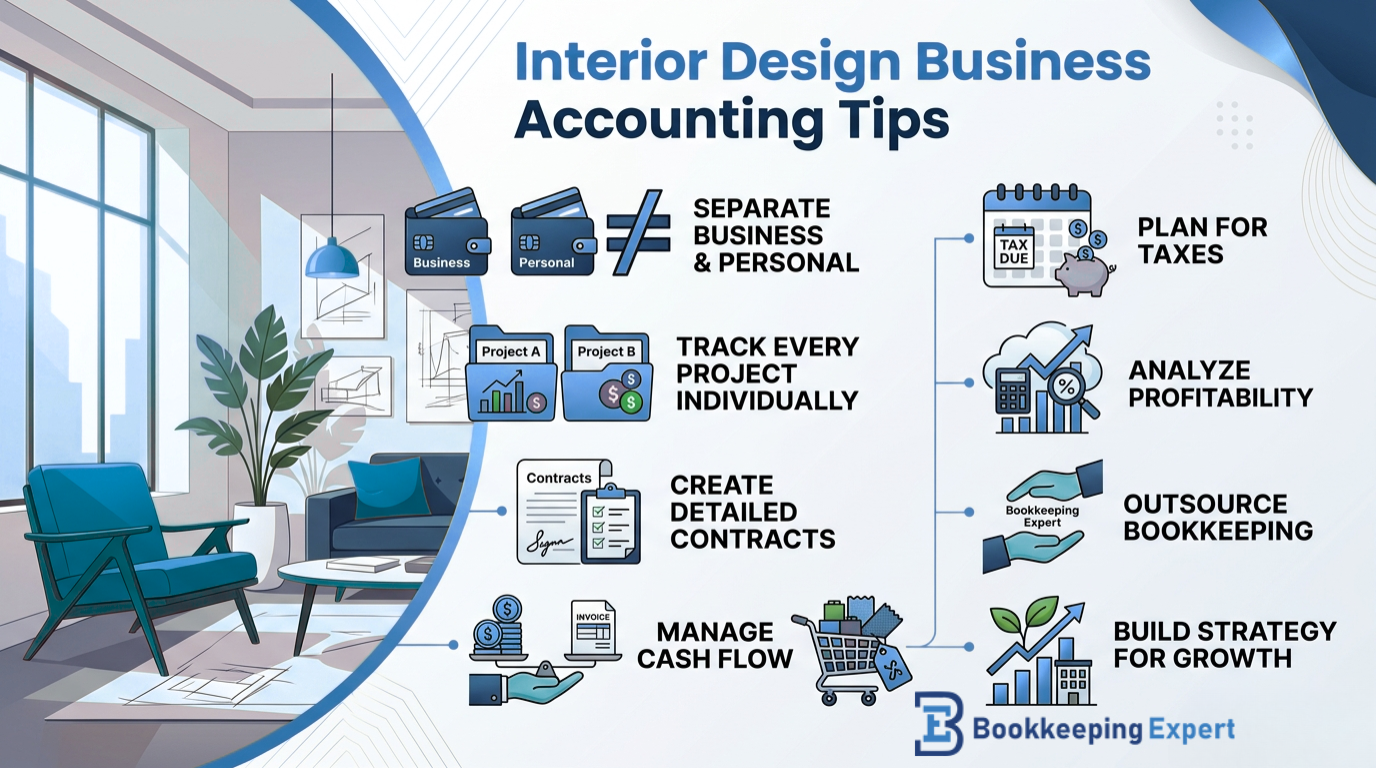
Running a successful interior design business requires more than creativity and stunning visual concepts. Behind every profitable design firm is a strong financial structure that keeps projects organized, budgets controlled, and cash flow stable. While designers focus on transforming spaces, accounting plays a critical role in ensuring the business itself remains financially healthy.
Interior design companies often manage multiple vendors, custom purchases, project timelines, and client billing structures simultaneously. Without proper accounting systems, even highly successful firms can experience financial confusion, delayed payments, and shrinking profits.
At Bookkeeping Expert, we help creative businesses simplify accounting processes so they can focus on delivering exceptional client experiences while maintaining financial clarity.
Why Accounting Is Essential for Interior Design Businesses
Interior design projects involve constant financial movement. From sourcing materials and paying suppliers to tracking labor costs and invoicing clients, financial management becomes increasingly complex as the business grows.
Strong accounting practices help interior design firms:
-
Maintain healthy cash flow
-
Track project profitability
-
Control operating expenses
-
Manage vendor payments efficiently
-
Avoid budgeting mistakes
-
Improve tax compliance
Without organized financial systems, project costs can quickly spiral out of control.
Separate Business and Personal Finances
One of the most important accounting habits for interior designers is keeping personal and business finances separate.
Using dedicated business accounts helps:
-
Simplify bookkeeping
-
Improve financial reporting accuracy
-
Reduce tax complications
-
Track project expenses clearly
-
Build professional credibility
Mixing personal and business transactions often creates accounting errors and unnecessary confusion during tax season.
Track Every Project Individually
Every interior design project has its own budget, timeline, supplier costs, and revenue structure. Tracking finances separately for each project allows businesses to understand which projects are most profitable.
Project-based accounting helps designers monitor:
-
Material expenses
-
Contractor payments
-
Client deposits
-
Design fees
-
Shipping and logistics costs
-
Profit margins
Accurate project tracking prevents overspending and improves pricing decisions for future work.
Create Detailed Client Contracts
Financial misunderstandings often begin with unclear agreements. Well-structured contracts protect both the designer and the client.
Interior design contracts should clearly outline:
-
Payment schedules
-
Deposit requirements
-
Scope of work
-
Revision policies
-
Procurement fees
-
Late payment terms
Clear contracts reduce disputes and improve payment consistency.
Manage Cash Flow Carefully
Cash flow is one of the biggest challenges in the interior design industry. Designers often pay vendors upfront while waiting for client payments to arrive.
To improve cash flow management:
-
Request upfront deposits
-
Invoice clients promptly
-
Set milestone-based payment schedules
-
Monitor outstanding invoices
-
Maintain emergency cash reserves
Healthy cash flow ensures projects continue smoothly without financial strain.
Monitor Material and Procurement Costs
Interior design businesses frequently purchase furniture, fixtures, décor, and custom materials on behalf of clients. Without proper expense tracking, procurement costs can become difficult to manage.
Accounting systems should track:
-
Vendor invoices
-
Purchase orders
-
Shipping costs
-
Markups
-
Inventory expenses
-
Client reimbursements
Careful procurement accounting protects profit margins and improves pricing accuracy.
Use Cloud-Based Accounting Software
Modern accounting software makes financial management more efficient for busy design firms.
Cloud accounting tools help businesses:
-
Track expenses in real time
-
Generate financial reports
-
Send invoices quickly
-
Monitor project budgets
-
Store receipts digitally
-
Access financial data remotely
Automation reduces manual bookkeeping errors and saves valuable time.
Plan for Taxes Throughout the Year
Many interior design businesses face tax challenges because they fail to plan ahead. Designers may deal with sales taxes, contractor payments, and varying business expenses that require accurate reporting.
To avoid tax surprises:
-
Track deductible expenses consistently
-
Save receipts and invoices
-
Set aside funds for taxes monthly
-
Maintain organized bookkeeping records
-
Work with accounting professionals
Year-round tax planning reduces stress and helps businesses remain compliant.
Analyze Profitability Regularly
Revenue alone does not determine business success. Interior designers should regularly review profitability reports to understand the true financial performance of the business.
Key metrics to monitor include:
-
Gross profit margins
-
Project profitability
-
Operating expenses
-
Cash flow trends
-
Vendor cost increases
-
Client acquisition costs
Financial analysis helps identify opportunities for growth and areas that need improvement.
Outsource Accounting for Better Efficiency
As design businesses expand, accounting responsibilities can become overwhelming. Outsourcing bookkeeping and accounting services allows designers to focus more on creativity and client relationships.
Professional accounting support can help with:
-
Financial reporting
-
Expense management
-
Payroll processing
-
Tax preparation
-
Cash flow monitoring
-
Budget forecasting
At Bookkeeping Expert, we provide accounting solutions tailored to the unique needs of interior design businesses in the UAE and beyond.
Build a Financial Strategy for Growth
Successful interior design firms combine creativity with strong financial planning. A clear accounting strategy supports long-term business growth by helping firms:
-
Scale operations confidently
-
Hire additional staff
-
Expand into larger projects
-
Improve profitability
-
Reduce financial risks
Financial organization creates stability and allows businesses to grow sustainably.
Final Thoughts
Interior design businesses thrive when creativity is supported by strong financial management. Accurate accounting helps firms stay organized, improve profitability, manage projects effectively, and maintain healthy cash flow.
By implementing modern accounting practices and working with experienced financial professionals, interior design companies can focus on delivering exceptional design experiences while building a financially strong business foundation.
At Bookkeeping Expert, we help creative businesses simplify accounting and gain the financial clarity needed for long-term success.
