
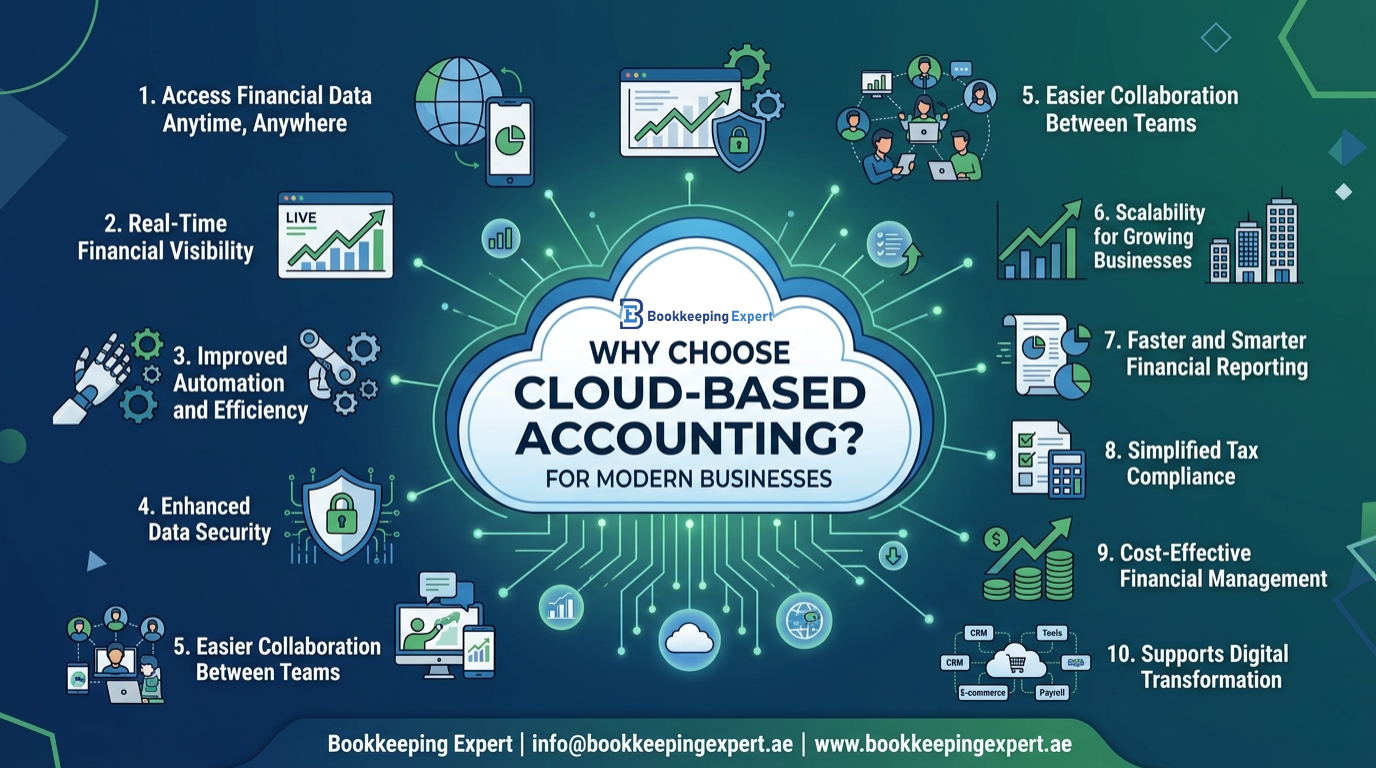
The way businesses manage finances has changed dramatically in recent years. Traditional accounting systems that relied on spreadsheets, paperwork, and manual data entry are rapidly being replaced by smarter, faster, and more connected cloud-based solutions.
In today’s digital-first business environment, companies need financial systems that offer flexibility, security, automation, and real-time access to financial data. Cloud-based accounting has become a game-changing solution for businesses looking to improve efficiency while maintaining complete financial visibility.
At Bookkeeping Expert, we help businesses modernize their accounting operations through innovative bookkeeping and cloud accounting solutions designed for long-term growth.
Let’s explore why cloud-based accounting is becoming essential for modern businesses.
What Is Cloud-Based Accounting?
Cloud-based accounting refers to financial management software hosted online rather than installed on a local computer or server. This allows businesses to access their accounting systems securely from anywhere using an internet connection.
Unlike traditional systems, cloud accounting offers:
-
Real-time financial updates
-
Automated processes
-
Secure cloud storage
-
Multi-user collaboration
-
Remote accessibility
This modern approach simplifies financial operations and supports smarter decision-making.
1. Access Financial Data Anytime, Anywhere
One of the biggest advantages of cloud accounting is flexibility.
Business owners, accountants, and finance teams can securely access:
-
Financial reports
-
Invoices
-
Expense records
-
Cash flow data
-
Payroll information
from any device, anywhere in the world.
This is especially valuable for:
-
Remote teams
-
Multi-location businesses
-
Entrepreneurs who travel frequently
-
Growing companies with distributed operations
Real-time access improves responsiveness and business agility.
2. Real-Time Financial Visibility
Traditional accounting systems often rely on delayed reporting, making it difficult to make fast financial decisions.
Cloud-based accounting provides:
-
Live financial dashboards
-
Instant reporting
-
Real-time cash flow monitoring
-
Updated transaction tracking
With accurate financial data available instantly, businesses can make more informed and proactive decisions.
3. Improved Automation and Efficiency
Manual bookkeeping processes consume time and increase the risk of human error.
Cloud accounting automates many routine tasks, including:
-
Bank reconciliations
-
Invoice generation
-
Expense categorization
-
Payroll processing
-
Tax calculations
Automation reduces administrative workload while improving accuracy and productivity.
4. Enhanced Data Security
Many businesses assume traditional local systems are safer, but modern cloud accounting platforms often provide stronger security protections.
Cloud-based systems typically include:
-
Data encryption
-
Secure backups
-
Multi-factor authentication
-
Automatic updates
-
Disaster recovery protection
This reduces the risk of data loss caused by hardware failures, theft, or cyber threats.
5. Easier Collaboration Between Teams
Cloud accounting allows multiple users to work within the same financial system simultaneously.
This improves collaboration between:
-
Business owners
-
Accountants
-
Bookkeepers
-
Financial advisors
-
Auditors
Everyone can access updated financial information without exchanging endless spreadsheets or email attachments.
6. Scalability for Growing Businesses
As businesses grow, financial management becomes more complex.
Cloud accounting systems are designed to scale easily by supporting:
-
Increased transaction volumes
-
Multiple users
-
Additional business locations
-
Advanced reporting needs
-
Third-party integrations
This makes cloud solutions ideal for startups, SMEs, and rapidly expanding companies.
7. Faster and Smarter Financial Reporting
Modern businesses rely heavily on financial insights to remain competitive.
Cloud accounting enables faster generation of:
-
Profit and loss statements
-
Cash flow reports
-
Balance sheets
-
Tax reports
-
Budget forecasts
Real-time reporting improves planning, forecasting, and operational control.
8. Simplified Tax Compliance
Tax compliance becomes easier when financial records are organized and updated automatically.
Cloud accounting systems help businesses:
-
Track tax obligations accurately
-
Maintain digital records
-
Generate tax-ready reports
-
Reduce filing errors
This minimizes compliance risks and supports smoother audits.
9. Cost-Effective Financial Management
Traditional accounting infrastructure often requires:
-
Expensive servers
-
IT maintenance
-
Manual upgrades
-
Physical storage
Cloud accounting eliminates many of these costs through subscription-based solutions with automatic updates and lower infrastructure requirements.
Businesses gain enterprise-level financial tools without significant upfront investment.
10. Supports Digital Transformation
Modern businesses are increasingly adopting digital workflows to remain competitive.
Cloud accounting integrates seamlessly with:
-
CRM systems
-
Payment platforms
-
E-commerce stores
-
Payroll software
-
Inventory management tools
This creates a connected financial ecosystem that improves operational efficiency and business intelligence.
Why Businesses Are Moving Toward Cloud Accounting
Businesses today need financial systems that are:
-
Flexible
-
Scalable
-
Secure
-
Efficient
-
Data-driven
Cloud-based accounting delivers all these advantages while supporting long-term growth and smarter decision-making.
At Bookkeeping Expert, we provide professional bookkeeping and cloud accounting services that help businesses simplify operations, improve financial visibility, and stay future-ready in an increasingly digital economy.
Final Thoughts
Cloud-based accounting is no longer just a technological upgrade — it has become a strategic business advantage. Companies that embrace modern financial systems gain faster access to data, stronger operational efficiency, improved compliance, and better scalability.
As businesses continue to evolve in a digital world, cloud accounting provides the flexibility and intelligence needed to manage finances confidently and efficiently.
Whether you are a startup, small business, or expanding enterprise, adopting cloud-based accounting can help build a stronger financial foundation for long-term success.
