
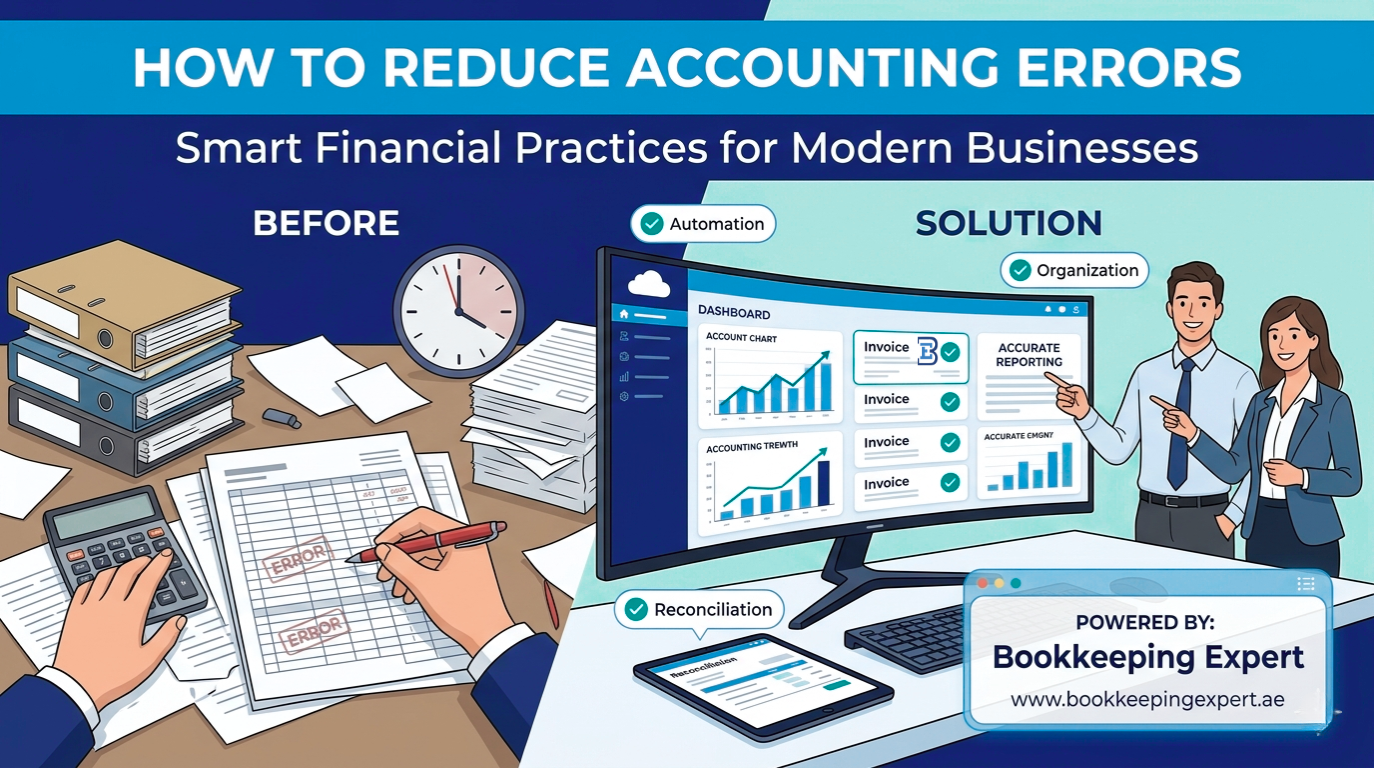
Accurate accounting is the foundation of every successful business. From managing cash flow to preparing financial reports, businesses rely on clean and reliable financial data to make informed decisions. However, accounting errors remain one of the most common challenges faced by companies of all sizes.
Even small mistakes in bookkeeping can lead to:
-
incorrect financial reporting,
-
tax compliance issues,
-
cash flow problems,
-
audit risks,
-
and poor business decisions.
At Bookkeeping Expert, we help businesses improve financial accuracy through modern bookkeeping solutions, efficient accounting systems, and proactive financial management practices.
Why Accounting Errors Happen
Accounting errors can occur for many reasons, including:
-
manual data entry mistakes,
-
lack of financial oversight,
-
poor recordkeeping,
-
outdated accounting systems,
-
insufficient staff training,
-
or inconsistent processes.
As businesses grow, financial transactions become more complex, increasing the risk of inaccuracies if proper controls are not in place.
1. Automate Accounting Processes
One of the most effective ways to reduce accounting errors is through automation.
Modern accounting software helps businesses:
-
automate calculations,
-
generate invoices,
-
reconcile accounts,
-
track expenses,
-
and create financial reports accurately.
Automation reduces human error while improving efficiency and consistency across accounting operations.
Popular cloud-based accounting systems also provide:
-
real-time financial visibility,
-
secure data storage,
-
and easier collaboration between teams.
2. Maintain Organized Financial Records
Disorganized records often lead to missing transactions, duplicate entries, and reporting inconsistencies.
Businesses should maintain:
-
invoices,
-
receipts,
-
bank statements,
-
payroll records,
-
tax documents,
-
and expense reports in a structured system.
Digital document management improves:
-
accessibility,
-
accuracy,
-
audit readiness,
-
and financial transparency.
Well-organized bookkeeping creates a stronger financial foundation for long-term growth.
3. Reconcile Accounts Regularly
Bank reconciliation is critical for identifying discrepancies early.
Regular reconciliations help businesses detect:
-
missing transactions,
-
unauthorized payments,
-
duplicate entries,
-
and recording errors.
Monthly reconciliation allows accounting teams to:
-
verify balances,
-
confirm transaction accuracy,
-
and maintain updated financial records.
Timely reviews help prevent small issues from becoming larger financial problems.
4. Separate Personal and Business Finances
Many accounting issues arise when personal and business expenses are mixed together.
Using separate:
-
bank accounts,
-
credit cards,
-
and payment systems
helps businesses maintain accurate financial records and simplifies bookkeeping processes.
This also improves:
-
tax reporting,
-
expense tracking,
-
and financial analysis.
5. Implement Internal Financial Controls
Strong internal controls help reduce the risk of accounting mistakes and financial fraud.
Examples include:
-
approval processes,
-
role-based access controls,
-
expense verification,
-
transaction reviews,
-
and audit trails.
Businesses should ensure that financial responsibilities are divided appropriately to improve oversight and accountability.
6. Train Accounting Staff Regularly
Accounting standards, tax regulations, and financial technologies continue to evolve.
Continuous staff training helps teams:
-
improve bookkeeping accuracy,
-
understand compliance requirements,
-
use accounting software effectively,
-
and follow best practices consistently.
Well-trained accounting professionals are better equipped to identify and prevent financial errors.
7. Standardize Accounting Procedures
Consistent financial processes reduce confusion and improve reporting reliability.
Businesses should establish clear procedures for:
-
expense recording,
-
invoicing,
-
payroll processing,
-
reconciliations,
-
and financial reporting.
Standardization improves:
-
workflow efficiency,
-
team coordination,
-
and data consistency.
Documented accounting policies also help maintain operational stability as businesses grow.
8. Conduct Regular Financial Reviews
Routine financial reviews allow businesses to identify irregularities before they become major problems.
Management should regularly review:
-
profit and loss statements,
-
balance sheets,
-
cash flow reports,
-
accounts receivable,
-
and expense trends.
Frequent analysis helps improve:
-
decision-making,
-
budgeting,
-
and financial forecasting.
9. Use Professional Bookkeeping Support
Outsourcing bookkeeping services can significantly reduce accounting errors, especially for growing businesses.
Professional bookkeeping experts provide:
-
accurate transaction recording,
-
financial reporting,
-
tax-ready records,
-
payroll support,
-
and compliance management.
At Bookkeeping Expert, we help businesses streamline their accounting operations while maintaining high levels of financial accuracy and efficiency.
Benefits of outsourced bookkeeping include:
-
reduced administrative workload,
-
improved compliance,
-
cost savings,
-
and access to experienced financial professionals.
10. Back Up Financial Data Securely
Data loss can create major accounting complications.
Businesses should maintain secure backups of:
-
accounting files,
-
invoices,
-
payroll data,
-
tax records,
-
and financial statements.
Cloud-based systems offer:
-
automatic backups,
-
enhanced security,
-
and disaster recovery support.
Protecting financial data ensures business continuity and operational stability.
11. Monitor Cash Flow Carefully
Cash flow errors can affect payroll, vendor payments, and operational planning.
Businesses should track:
-
incoming payments,
-
recurring expenses,
-
outstanding invoices,
-
and short-term liabilities regularly.
Accurate cash flow management improves:
-
financial control,
-
liquidity planning,
-
and investment decisions.
Why Businesses Choose Bookkeeping Expert
Bookkeeping Expert provides modern bookkeeping and accounting solutions tailored to businesses across various industries.
Our services help businesses:
-
reduce accounting errors,
-
improve financial reporting,
-
strengthen compliance,
-
streamline bookkeeping processes,
-
and enhance operational efficiency.
With experienced professionals and technology-driven solutions, we support businesses in building accurate and reliable financial systems.
Final Thoughts
Reducing accounting errors requires a combination of:
-
accurate processes,
-
organized recordkeeping,
-
automation,
-
internal controls,
-
and professional financial oversight.
Businesses that invest in strong accounting practices benefit from:
-
better financial clarity,
-
improved compliance,
-
reduced operational risks,
-
and smarter decision-making.
Bookkeeping Expert helps businesses simplify financial management with reliable, efficient, and modern bookkeeping solutions designed for long-term business success.
